برچسب: Champions

  • Chelsea Learn the Hard Way: Conference League Glory Means Nothing in the Champions League

    Chelsea Learn the Hard Way: Conference League Glory Means Nothing in the Champions League

    [ad_1]

    Chelsea fans had every right to celebrate this summer. The club won the Conference League and then the Club World Cup. They had trophies. They had swagger. For a while, the mood felt untouchable.

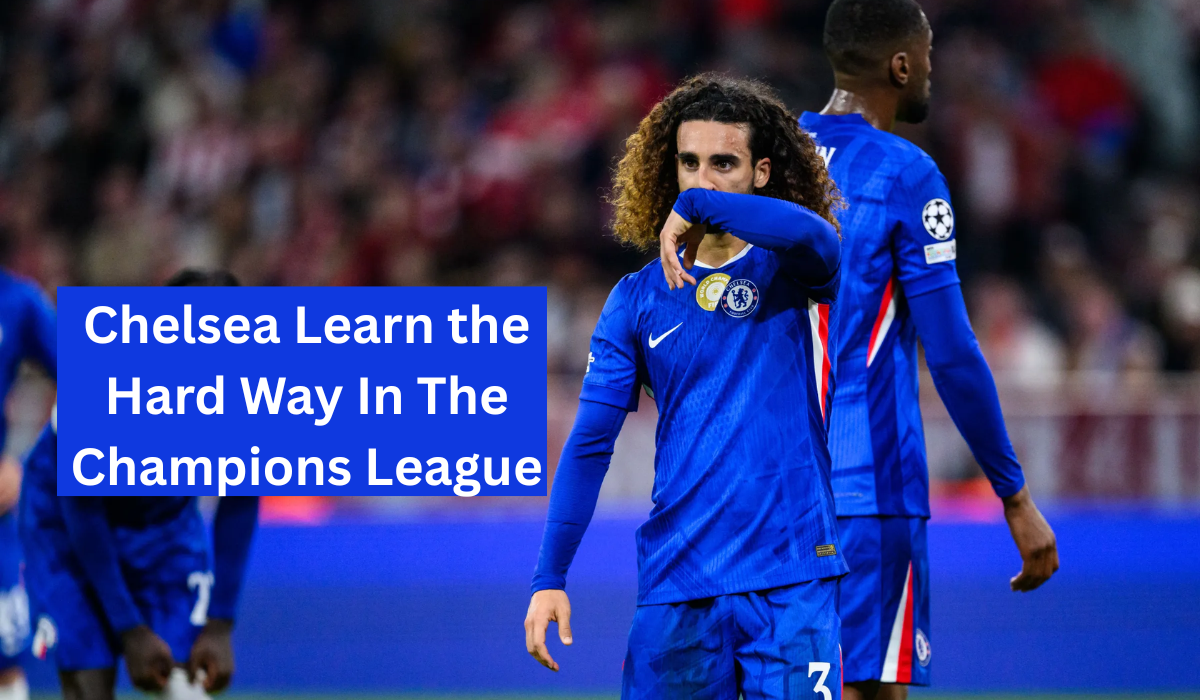
    Then Bayern Munich handed Chelsea a reality check. The Allianz Arena was loud. The outing ended 3–1. Harry Kane scored twice. Chelsea’s Trevoh Chalobah put through his own net in the 20th minute. Kane also converted a penalty. Cole Palmer pulled one back quickly for Chelsea, but Kane finished the game in the 63rd minute, and Bayern never looked back. The headlines were brutal and deserved.

    The stats tell the story. Bayern had 55.7% possession and 16 shots. Chelsea had 44.3% and nine attempts. Bayern had six corners to Chelsea’s two. Chelsea made chances, yes. But they also made mistakes. One error on the edge of their box was punished instantly. ESPN’s match sheet shows the defensive lapses and the final numbers.

    Bayern didn’t stop with the win. Their U.S. account asked, cheekily, “Are we world champions now?” after the match. It was a poke and a reminder that big clubs love to rub it in when they can. The tweet landed like a message: your smaller trophies do not equal this level.

    This result isn’t an overreaction. Chelsea’s Conference League triumph was real. The Club World Cup was real. But those trophies do not suddenly make a side ready to stand toe-to-toe with the elite every week. The Champions League is different. The pace is higher. The small mistakes are punished harder. The players Bayern fielded know this instinctively. They found Chelsea’s weak spot and went through it.

    So what should Chelsea do now? Their remaining Champions League fixtures are not so easy. They go home to Stamford Bridge to face Benfica on September 30. Then Ajax on October 22, followed by Qarabağ (who came from 2 goals down to beat Benfica) on November 5, and Barcelona at home on November 25. The draw is brutal in its variety. Chances must be taken when they come. These are simple demands, but they matter more here than in the Conference League.

    If Chelsea fails to qualify from the league phase, the consequences will be clear and harsher than before. Under the new Champions League format, there is no safety net. Teams that fail to make the knockout places DO NOT drop into the Europa League. Once you are out, you are out. UEFA changed that rule to make the league phase mean more (and this makes the new UCL format better, anyway). That should scare clubs that treat the group stage as a consolation prize. Chelsea must treat every match like a final.

    This week’s loss will sting. It should. But it can also be useful. A reality check forces improvement. It exposes thin places in the squad and the system. It reveals who handles pressure and who crumbles. Chelsea has time to respond. They have talent. Palmer showed his class with a lightning goal. But talent alone won’t be enough. Tactical discipline will.

    There is also a psychological angle. Fans who’ve drunk the champagne of a few unlikely trophies must now face a humbling truth. Celebrations are fun. They should not be a substitute for squad building. Winning a Conference League and a Club World Cup can lift a club’s profile. But they do not rewrite competitive hierarchies overnight. Bayern proved that. The test starts now. Benfica, Ajax and Barcelona will not be gentle. The Blues have to stop seeing past glories as proof that they are there yet. They’re not.

    So, expect banter. Expect memes. Expect Club and fans trolling on X. But expect Chelsea to learn. That is the best hope. If Maresca gets his tactics right and the players stop gifting chances, Chelsea can still make the knockout rounds. If they don’t, the new Champions League gives them no second chance. And remember: in this competition, yesterday’s trophy means nothing tomorrow.


    [ad_2]

    Source link
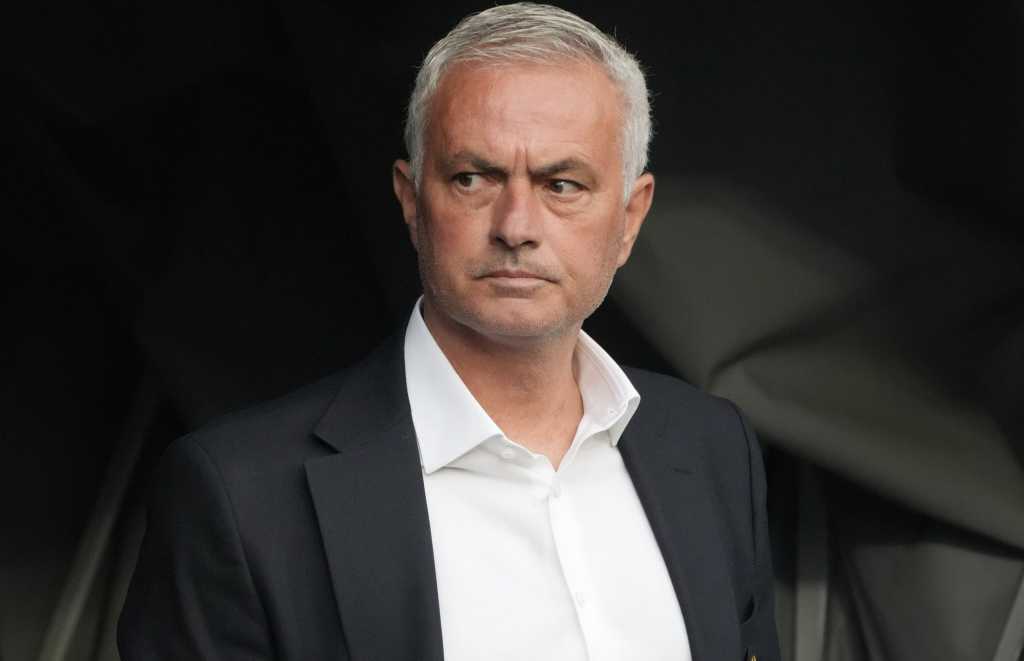
  • Jose Mourinho returns to Chelsea amid ‘advanced talks’ with Champions League team

    Jose Mourinho returns to Chelsea amid ‘advanced talks’ with Champions League team

    [ad_1]

    The Portuguese coach was dismissed by Fenerbahce last month after the Turkish side failed to secure a place in the Champions League group stage, falling short against Benfica with a narrow 1-0 aggregate loss. ..Continue Reading

    [ad_2]

    Source link

  • Why the New Champions League Format Actually Works Better Than We Thought

    Why the New Champions League Format Actually Works Better Than We Thought

    [ad_1]

    When UEFA announced the new 36-team, single-league format, a lot of people were angry. They said it was a cash grab. They warned of more games and more fatigue. They feared the old magic would die. Those critics were loud. Some players were worried, too. Liverpool goalkeeper Alisson said players were not asked and voiced concern about extra matches.

    I get the worry. Change often looks greedy at first. And yes, UEFA will make more money. But watching the competition unfold shows another side. The new format gives us better nights earlier. It turns group days into real events. It forces big teams to meet sooner. And that makes the tournament more exciting.

    The old system was simple. Three opponents. Six games. Too often, the big matches came too late. Fans waited for the knockouts to build drama. The new model has each club play eight opponents. No repeats. That means variety. It means real tests from the start. UEFA and many outlets argued this would lift the spectacle. The Week explained how the so-called “Swiss model” aims to make every match count.

    Look at the evidence on the pitch. Last season, we did not have to wait until the last eight to get heavyweight clashes. Huge games arrived in the league phase. Paris Saint-Germain’s 4-2 victory over Manchester City is one example of the kind of high-stakes match we now see more frequently. That result mattered to the table and to fans. It would not have been part of a standard small group format in the same way.

    Classic drama is still there. Great matches still happen. Inter’s extra-time win over Barcelona in 2024-25 is a reminder that the format keeps the cup feel alive. Those nights still give the tournament its lore. But the difference now is timing. We get more of those nights. We get them spread out. FourFourTwo’s recent ranking of great UCL games even notes some of these fresh classics.

    Critics said this would be worse for the players. They said more games mean more fatigue. That is a fair point. Players do not want endless travel and fixtures. Alisson’s comments underline that concern. He told reporters that players often felt left out of the planning and were tired. That is a voice UEFA should not ignore.

    But the call for caution is not the same as a call to cancel the format. The format was adjusted to avoid the worst outcomes. For example, the league phase has eight matches, not ten. That reduces the load from some early proposals. Analysts at ESPN laid out the early results and asked if the criticism was fair. For many fans, the answer is starting to look like “no.” The competition can be intense without being ruinous.

    Another common charge was that UEFA only wanted more money. SI ran pieces arguing that the change was for profit first. That is partly true. Big tournaments are businesses. But business motives and better football are not mutually exclusive. If a format change creates more meaningful games, more big nights and more interest from casual fans, then it serves both the sport and the sport’s finances. That does not make it cynical by default.

    What matters now is what the format gives fans. The group phase feels alive. There are fewer dead games. Smaller clubs get to play the big clubs more often. That is good for supporters and for the sport’s health. OneFootball’s guide explained the mechanics and why the change spreads the top fixtures across the season. That matters to broadcasters. It also matters to fans who want to see teams they care about playing the best sides more often.

    We also need to judge outcomes, not just intentions. After a few matchdays, pundits who disliked the idea have softened. Some defenders of the change say the drama is back and the unpredictability is a net win. The Spectator noted how the new format can shake up old certainties. The evidence in the field supports that.

    That said, this is not a final verdict. The calendar is tight. Player welfare must remain central. UEFA should keep talking to players and managers. If fatigue rises, tweaks are needed. But so far, the format has delivered the one thing fans asked for more of: big matches that matter, early and often.

    In short, the new Champions League format was not perfect on day one. The debate was necessary. But the early results are persuasive. The competition feels fresher. The group phase no longer hides from big clashes. Fans see more top games without waiting for the knockout rounds. The change was risky. It was worth the risk.

    If you still dislike it, ask yourself this: would you rather wait months for a single blockbuster, or watch several across the season? My bet is on the latter. Football is about nights that burn in the memory. The new format gives us more of those nights. And for now, that makes it work better than many of us first thought.

    [ad_2]

    Source link

  • UEFA issue Chelsea statement over Champions League ban

    UEFA issue Chelsea statement over Champions League ban

    [ad_1]

    Back in July, the reigning Club World Cup winners were handed a £27 million fine for breaching UEFA’s financial regulations, specifically those related to football earnings and the squad cost ratio. ..Continue Reading

    [ad_2]

    Source link

  • Arsenal ‘banned’ from facing Inter in the Champions League due to UEFA rule

    Arsenal ‘banned’ from facing Inter in the Champions League due to UEFA rule

    [ad_1]

    A recent UEFA regulation update could prevent Arsenal from playing Inter Milan at the San Siro in next season’s Champions League league phase.

    Just last week, Arsenal discovered their opponents for the current campaign’s expanded league format, which includes eight fixtures against top European sides: Bayern Munich (home), Inter Milan (away), Atletico Madrid (home), Club Brugge (away), Olympiakos (home), Slavia Prague (away), Kairat Almaty (home), and Athletic Bilbao (away). ..Continue Reading

    [ad_2]

    Source link

  • UEFA confirm major Champions League rule change that impacts Arsenal & Chelsea

    UEFA confirm major Champions League rule change that impacts Arsenal & Chelsea

    [ad_1]

    Previously, the top eight teams in the League Phase were rewarded with the opportunity to play the second leg of their round of 16 ties at home. ..Continue Reading

    [ad_2]

    Source link

  • Mbappe breaks his silence on PSG winning the Champions League after he left club

    Mbappe breaks his silence on PSG winning the Champions League after he left club

    [ad_1]

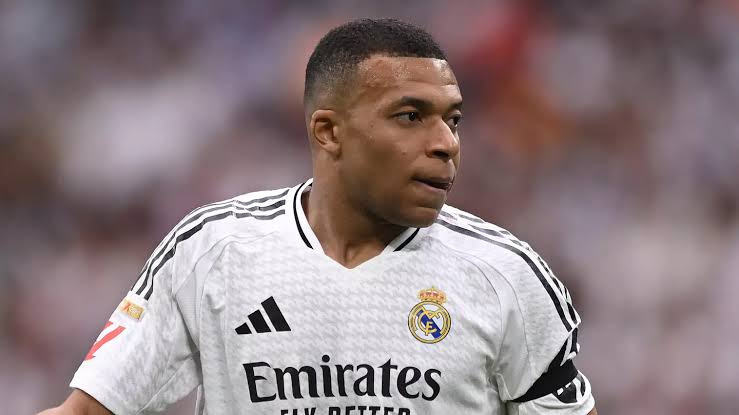
    The French forward departed PSG last summer, making a high-profile move to Real Madrid on a free transfer. ..Continue Reading

    [ad_2]

    Source link

  • Opta supercomputer predicts who’ll qualify for Champions League between Newcastle, Chelsea & Aston Villa

    Opta supercomputer predicts who’ll qualify for Champions League between Newcastle, Chelsea & Aston Villa

    [ad_1]

    The battle for Champions League qualification is set to be decided on the final day, with Manchester City, Chelsea, Aston Villa, Nottingham Forest, and Newcastle United all still in contention.

    Liverpool and Arsenal have already secured their places in next season’s competition, but the remaining three spots are still up for grabs. ..Continue Reading

    [ad_2]

    Source link

  • What Chelsea, Man City, Newcastle, Aston Villa & Nottingham need to secure Champions League

    What Chelsea, Man City, Newcastle, Aston Villa & Nottingham need to secure Champions League

    [ad_1]

    So far, Liverpool and Arsenal have secured their places as two of the six Premier League clubs set to compete in the Champions League next season.

    One more spot will go to either Manchester United or Tottenham Hotspur, depending on the outcome of Wednesday night’s Europa League final. .Continue Reading

    [ad_2]

    Source link

  • Champions League Final 2025 Prediction: PSG vs Inter Milan Tactical and Statistical Analysis

    Champions League Final 2025 Prediction: PSG vs Inter Milan Tactical and Statistical Analysis

    [ad_1]

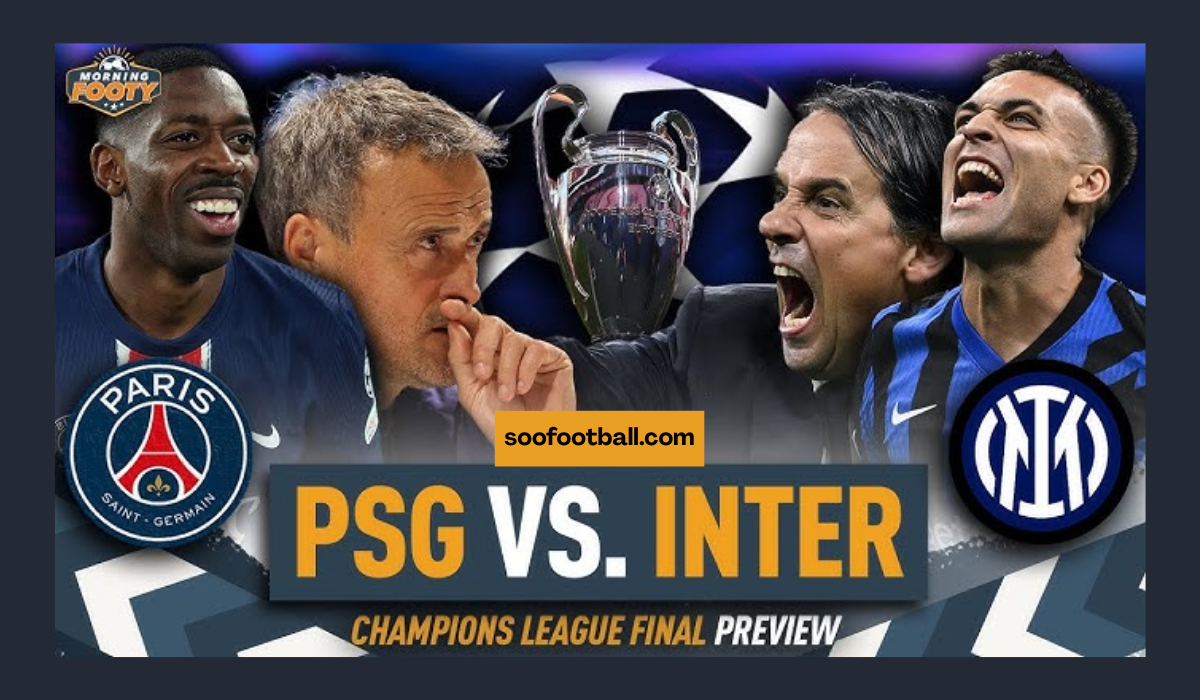
    The 2025 UEFA Champions League Final is set to be a thrilling encounter between Paris Saint-Germain (PSG) and Inter Milan. Both teams have demonstrated exceptional form throughout the tournament, and their contrasting styles promise an exciting match. This article comprehensively analyses their performances, tactical approaches, and key statistics to offer a data-driven Champions League Final 2025 prediction.

    A potent attack and a cohesive team have marked PSG’s journey to the final play. Under Luis Enrique’s guidance, the team has evolved into a dynamic unit, shedding its reliance on individual stars. They have scored 25 goals in the tournament, averaging 2.09 goals per match, with a possession rate of 60.34% and a passing accuracy of 89.5%. Their offensive prowess is further highlighted by 21 assists and 16 clear chances created.

    Defensively, PSG has conceded 10 goals, averaging 0.84 goals against per match, and secured five clean sheets. Goalkeeper Gianluigi Donnarumma has been instrumental, recording 29 saves and a save percentage of 77%, conceding only 0.75 goals per game. His resurgence has been pivotal in PSG’s progression to the final.

    Inter Milan, on the other hand, has built its campaign on a formidable defence. They have conceded just two goals in the tournament, averaging 0.2 goals against per match, and boast eight clean sheets. Their goalkeeper has made 31 saves, contributing to their defensive solidity. Offensively, Inter has scored 15 goals, averaging 1.5 goals per match, with a possession rate of 51.2% and a passing accuracy of 88.3%.

    Lautaro Martínez has been a standout performer for Inter, scoring a hat-trick against Monaco and reaching 150 goals for the club. The team’s tactical discipline is evident in their 364 balls recovered and 55 tackles won.

    In terms of tactical approaches, PSG’s high-possession game and fluid attacking movements contrast with Inter’s structured defence and counter-attacking strategy. PSG’s ability to control the midfield and create scoring opportunities will test Inter’s defensive resilience. Conversely, Inter’s capacity to absorb pressure and exploit counter-attacks could challenge PSG’s defence.

    Considering the statistical data and tactical nuances, the Champions League Final 2025 prediction leans slightly in favour of PSG. Their superior goal-scoring record, higher possession rate, and cohesive team dynamics suggest they have the edge. However, Inter’s exceptional defence and experience in managing high-stakes matches cannot be underestimated. The outcome will likely hinge on key moments and individual brilliance.

    In conclusion, the UEFA Champions League Final between PSG and Inter Milan is poised to be a closely contested battle. While PSG’s attacking flair positions them as slight favourites, Inter’s defensive prowess ensures they remain formidable opponents. We can all anticipate a match rich in tactical intrigue and high-quality football.

    [ad_2]

    Source link