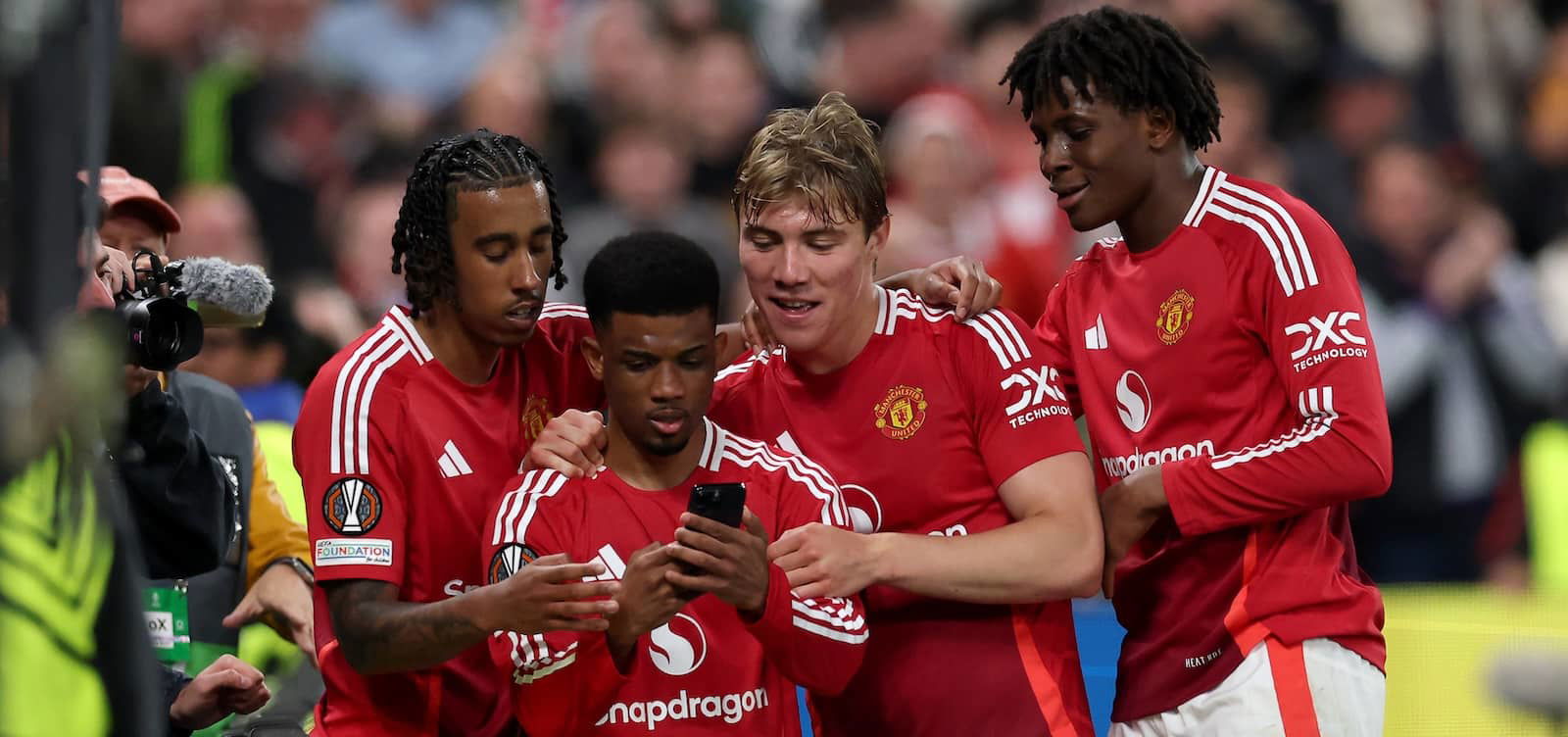
Old Trafford was witness to yet another magical European night as Manchester United came back from a goal down to thrash Athletic Club 4-1 in the Europa League semi-final second leg on Thursday.
An aggregate win of 7-1 against La Liga’s meanest defence is no mean feat and sets it up brilliantly for the final against Tottenham Hotspur in Bilbao in 13 days’ time.
Despite an aggregate 3-0 lead, it was a tough start for the hosts as the Basque side dominated the first 45 minutes, getting a goal in the 31st minute.
They put the home side under a lot of pressure at the start of the second half, which Leny Yoro helped weather on his own at times. That prompted Ruben Amorim to make a triple substitution, which changed the game completely.
Brilliant cameo
Mason Mount grabbed a brace, while Casemiro and Rasmus Hojlund got in on the act as well. And the head coach did not fail to mention Amad’s contribution as well.
In 27 minutes, he grabbed the assist for Hojlund’s goal, which he put on a plate for the Dane after fabulous work down the right.
His ability to maneuver in tight areas and dribble past players is magical to witness and on Thursday, he completed a 100% of his dribbles during his cameo.
He had one shot which was blocked while three of his touches were inside the penalty box while one of his passes was into the final third.
Selection dilemma for Amorim
Not only with the ball, the Ivorian was class off it as well, recovering the ball twice while winning all his ground duels as well as aerial duels (all stats via fotmob).
This display will certainly make Amorim think about who he is going to start either side of the attacker against Spurs at the San Mames on May 21.
While Alejandro Garnacho runs straight at defenders, and is very direct, the Ivory Coast international can do a lot of different things and it is good for the head coach to have multiple options ahead of the biggest game of the season.
Amad’s return from injury has been timed just right with the 22-year-old netting once and assisting one in his last two substitute appearances.
Inter Milan secured a thrilling 7-6 aggregate victory over Barcelona to book their spot in the final.
Barcelona appeared poised to reach the grand stage at the Allianz Arena after overturning a two-goal deficit to lead 3-2 in the closing minutes. ..Continue Reading
However, Inter struck a late equalizer in normal time before sealing the win in extra time, in what will be remembered as one of the most dramatic ties in Champions League history.
Either Paris Saint-Germain or Arsenal will face Inter in the final, with the two teams meeting in Paris for their decisive second leg on Wednesday.
PSG holds a narrow 1-0 advantage following their hard-fought win at the Emirates Stadium last week.
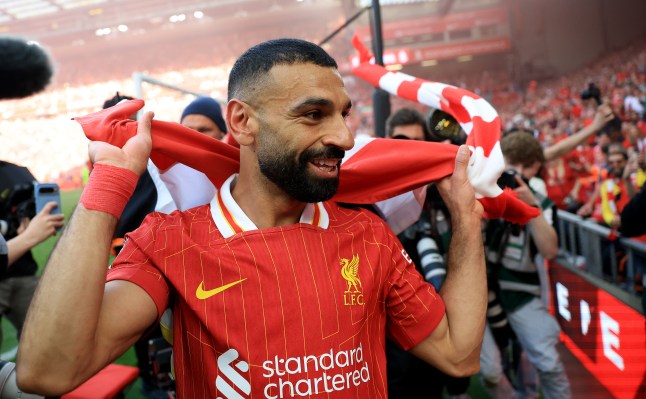
While many pundits believe Arsenal has a real chance of mounting a comeback in Paris, Salah has cautioned that they will once again be facing the ‘best team in Europe’ in PSG.
The French champions eliminated Aston Villa and Premier League winners Liverpool on their way to the semi-finals, also thrashing Manchester City during the league phase.
Luis Enrique’s side dominated Liverpool at home but still arrived at Anfield trailing by a goal after Harvey Elliott’s late strike for the Reds.
Despite the setback, PSG responded with a crucial 1-0 away win before triumphing in the penalty shootout to keep their hopes alive of lifting their first-ever Champions League title.
‘I have to be very honest, PSG were playing a very good game in the first leg,’ Salah told French outlet L’Equipe.
‘We were so lucky that Alisson had his best game in the club’s history probably. Then they came to Anfield. We were so unlucky because we hit the post two to three times.
‘That game was honestly 50/50 who deserved it more. No one could say. We played a very good second half. They played a very good first leg. Nobody here would say they deserved it 100 per cent.
‘It was their day and I shook their hands and said to their players after “congratulations, go and win” and that’s it. We faced the best team in Europe in that tie.’
Barcelona boss Hansi Flick, meanwhile, expressed his pride at his team after their semi-final defeat to Inter Milan.
‘I’m very disappointed that we’re out – but I’m not disappointed about the performance of my team. They tried everything,’ he said.
‘We’re out, but next year we’ll start again and we’ll make our fans, the club and everyone around us happy.
‘They [Inter] are a really good team, a strong team who defend well but also they have a really good striker.
‘In the second half we were really good. We gave everything but in the end it was like that and that’s what made me a bit sad.’
Date: Wednesday night Kick-off: 20:00 Venue: Parc des Princes, Paris Occasion: UEFA Champions League Semi-Final (2nd Leg)
Football fans, buckle up—because we’re heading to the Parc des Princes for a continental heavyweight showdown that could define the season for both clubs. Paris Saint-Germain host Arsenal in what promises to be an electrifying second leg of the UEFA Champions League semi-final. PSG have the slenderest of leads thanks to their 1-0 win in North London, but the Gunners aren’t out of the fight yet—not by a long shot.
This isn’t just any semi-final. This is a clash of two titans desperate to shake off past UCL heartbreaks and write a new chapter. For PSG, it’s a golden chance to finally get their hands on that elusive first Champions League trophy. For Arsenal, it’s about proving to the world that their rebuild under Mikel Arteta can deliver on the biggest stage of all.
Let’s dive in, Gooners and Parisiens—this one is going to be a rollercoaster.
The Story So Far
PSG landed the first blow. Ousmane Dembele’s early strike at the Emirates gave Luis Enrique’s side a crucial away win and a one-goal cushion heading into the return leg. While the scoreline was tight, PSG were electric in the opening 20 minutes—swarming the ball, pressing like demons, and carving Arsenal open with pace and flair.
But Arsenal regrouped. They settled into the game, had their moments, and could have easily nicked an equaliser had Gianluigi Donnarumma not pulled off a world-class save or two. It wasn’t the worst result for Arteta’s men, but they now face an uphill climb in Paris.
To make matters more intriguing, both sides slipped up in their domestic leagues over the weekend. PSG were stunned 2-1 by Strasbourg, while Arsenal fell to a frustrating 2-1 defeat at home to Bournemouth. Still, both managers rotated heavily with this midweek blockbuster in mind—so expect their strongest lineups when the lights shine brightest.
Head-to-Head & Recent Form
Before Dembele’s heroics in the first leg, Arsenal had PSG’s number. The Gunners were unbeaten in four previous meetings, including a 2-0 win in the group stage this season. That alone should give Arsenal fans a glimmer of hope—especially considering the Londoners have shown they can frustrate PSG’s stars when organised.
That said, form favours the French champions. Despite only two wins in their last six games across competitions, PSG have made the Parc a fortress in Europe this season. Their ability to start fast and feed off the home crowd’s energy could make the difference.
Arsenal, meanwhile, are wobbling slightly. Three games without a win, and the creativity has dried up at the wrong time. But this is the Champions League—a platform for heroes. The Gunners will need every ounce of composure, resilience, and clinical edge to pull off what would be a famous European comeback.
Tactics & Key Battles
Here’s where the chess match begins. PSG love to stretch play with width and raw pace. Bradley Barcola is expected to replace the injured Dembele, and he’ll be a major threat down the flanks. With Kvaratskhelia floating and Hakimi bombing forward, Arsenal’s full-backs will need to be laser-focused.
In midfield, Fabian Ruiz, Vitinha, and Neves will look to control tempo and exploit Arsenal’s defensive transitions. But here’s the good news for Gooners: Thomas Partey is back. The Ghanaian’s presence offers a massive boost. His ability to shield the defence and free up Declan Rice to push forward could tilt the balance in Arsenal’s favour.
It’s also a big night for Martin Ødegaard, who needs to impose himself and thread passes that split PSG’s backline. With Bukayo Saka and Gabriel Martinelli cutting inside and sniffing for chances, the Gunners do have the firepower to cause damage.
Players to Watch
Bradley Barcola (PSG) – He scored against Strasbourg at the weekend and will be full of confidence. His movement and finishing will test Arsenal’s backline.
Declan Rice (Arsenal) – Scored in the Premier League on the weekend and thrives in big games. If he drives forward, he could disrupt PSG’s rhythm.
Donnarumma (PSG) – His saves in the first leg were huge. Arsenal will test him again, and he’ll need to be just as sharp.
Saka & Martinelli (Arsenal) – This is their time to shine. If they get isolated against PSG’s fullbacks, they’ll be licking their lips.
This tie is far from over. Yes, PSG have the upper hand. Yes, they’re at home. But Arsenal have a history of bouncing back and love playing with their backs against the wall. If they can survive the early onslaught and find a goal before half-time, this tie flips on its head.
Expect a fast start, a few nervy moments, and at least one stunner. But ultimately, PSG’s experience and quality at home might just edge it.
The Bundesliga is Germany’s top-tier professional football league, recognized worldwide for its competitive nature and passionate fan base. Established in 1963, the league has become one of the most prestigious in Europe, producing legendary players, world-class clubs, and thrilling football experiences. Unlike many other European leagues, the Bundesliga is known for its strong emphasis on homegrown talent, financial sustainability, and fan-friendly policies.
Before the Bundesliga’s formation, German football was fragmented into various regional leagues, lacking a unified system. The introduction of a nationwide league helped streamline professional football in Germany, allowing clubs to compete at a higher level and ensuring better organization. Since then, the Bundesliga has undergone numerous transformations, including structural changes, increased commercial appeal, and advancements in player development programs.
A key characteristic of the Bundesliga is its remarkable attendance figures. It consistently boasts one of the highest average attendance rates in global football, surpassing leagues like the English Premier League and La Liga. This is largely due to its affordable ticket prices and a culture that prioritizes fan involvement. The iconic 50+1 rule, which prevents private investors from owning a controlling stake in clubs, ensures that supporters maintain significant influence over their teams.
Another defining aspect of the Bundesliga is its fast-paced, high-scoring matches. Compared to other top European leagues, Bundesliga games tend to feature more goals per match on average, making it an attractive spectacle for fans. Clubs like Bayern Munich, Borussia Dortmund, and RB Leipzig have played significant roles in shaping the league’s identity, competing in both domestic and international tournaments.
Understanding what is Bundesliga is crucial for any football enthusiast looking to explore the dynamics of European football. It is a league built on history, tradition, and a commitment to excellence. Whether through its top-class football, passionate supporters, or impressive youth development programs, the Bundesliga remains a cornerstone of the global football landscape.
Structure and Format of the Bundesliga
The Bundesliga operates under a unique league format that distinguishes it from other major European football competitions. Unlike leagues such as the English Premier League or Serie A, which have 20 teams, the Bundesliga consists of 18 teams. This structure results in a slightly shorter season, with each club playing 34 matches—17 at home and 17 away.
One of the key features of the Bundesliga is its promotion and relegation system, which connects it to the 2. Bundesliga, the second division of German football. At the end of each season, the bottom two teams in the Bundesliga are automatically relegated to the second tier, while the top two teams from the 2. Bundesliga are promoted. The 16th-placed Bundesliga team then plays a two-legged relegation playoff against the third-placed team from the 2. Bundesliga to determine which club will compete in the top division the following season.
3 points for a win
1 point for a draw
0 points for a loss
If two or more teams finish the season with the same number of points, the league uses several tie-breaking criteria to determine rankings. The first tiebreaker is goal difference, followed by total goals scored. If teams are still tied, head-to-head results between the clubs are considered.
Bayern Munich
Borussia Dortmund
RB Leipzig
Bayer Leverkusen
Eintracht Frankfurt
SC Freiburg
VfL Wolfsburg
Union Berlin
Borussia Mönchengladbach
Werder Bremen
VfB Stuttgart
TSG Hoffenheim
FC Augsburg
FSV Mainz 05
VfL Bochum
FC Heidenheim
Darmstadt 98
While the list of teams may change from season to season due to the promotion and relegation system, certain clubs like Bayern Munich and Borussia Dortmund have consistently remained in the top flight, shaping the league’s competitive landscape.
The league schedule runs from August to May, with a winter break in December and January, a tradition that accommodates Germany’s colder climate. Unlike some leagues, the Bundesliga also has a balanced fixture calendar, ensuring that each team faces every opponent twice in a fair and organized manner.
This structured format, combined with financial regulations and youth development programs, makes the Bundesliga one of the most sustainable and well-managed leagues in world football.
Historical Evolution of the Bundesliga
The Bundesliga has undergone significant changes since its establishment in 1963, evolving into one of the most respected football leagues in the world. Initially, German football was divided into multiple regional leagues known as the Oberliga, with no centralized national competition. The need for a unified, professional league became evident when Germany failed to compete effectively on the international stage in the 1950s.
After the German Football Association (DFB) approved the formation of a national league, the Bundesliga was launched with 16 teams, a number that later expanded to 18. The league’s early years were dominated by clubs like 1. FC Köln and Borussia Mönchengladbach, but it wasn’t long before Bayern Munich emerged as the most dominant force.
Major Transformations Over the Decades
One of the most significant moments in Bundesliga history was the reunification of Germany in 1990. This allowed clubs from East Germany to participate in the league structure, integrating teams that had previously competed in the separate DDR-Oberliga. This shift increased the league’s competitiveness and broadened its national appeal.
The 1990s and early 2000s saw increased commercialization and global reach, with the Bundesliga negotiating lucrative broadcasting deals. The introduction of modern stadiums before the 2006 FIFA World Cup in Germany also helped the league attract more international attention.
Today, understanding what is Bundesliga requires looking at its legacy as a league that balances financial stability with high-level competition. With strict financial regulations, an emphasis on youth development, and a tradition of exciting, attacking football, the Bundesliga continues to set itself apart as one of the world’s premier football leagues.
Bundesliga’s Impact on German Football
The Bundesliga has played a crucial role in shaping German football, both at the club and international levels. It is not just a competition; it serves as a platform for talent development, financial sustainability, and strategic football innovation. The league’s commitment to youth development and tactical evolution has made Germany one of the most successful football nations in history.
One of the biggest contributions of the Bundesliga is its youth academy system. Clubs invest heavily in their academies, focusing on technical and tactical training from a young age. The introduction of strict youth development regulations in the early 2000s has resulted in a steady pipeline of world-class players. This system produced stars such as Thomas Müller, Joshua Kimmich, and Jamal Musiala, who have become key figures for both their clubs and the national team.
Additionally, the Bundesliga’s financial model has been widely praised for its sustainability. Unlike other major European leagues, German clubs follow the 50+1 ownership rule, which ensures that fans retain majority control over club decisions. This prevents reckless spending and financial mismanagement, making the Bundesliga one of the most stable leagues in global football.
The league has also had a significant impact on Germany’s international success. Many key players in the German national team play in the Bundesliga, providing a strong domestic core that has led to victories in major tournaments, including the 2014 FIFA World Cup.
Year
Number of Bundesliga Players in Squad
Major Tournament Played
2010
19 out of 23
FIFA World Cup (3rd Place)
2014
16 out of 23
FIFA World Cup (Winners)
2018
15 out of 23
FIFA World Cup (Group Stage)
2022
17 out of 26
FIFA World Cup (Group Stage)
The table above shows the influence of the Bundesliga on the German national team. Despite fluctuating performances in recent tournaments, Bundesliga-based players remain the backbone of the squad.
Beyond player development, the league has also influenced tactical approaches in world football. The high-pressing style used by clubs such as RB Leipzig and Bayern Munich has been adopted by teams across Europe. Coaches trained in the Bundesliga, including Jürgen Klopp and Thomas Tuchel, have brought German tactical ideas to leagues like the Premier League and La Liga.
As a result, the Bundesliga continues to be a vital component of German football’s success. Through its commitment to sustainable growth, player development, and tactical evolution, the league will likely remain at the forefront of European football for years to come.
International Influence and Broadcast Reach
Over the years, the Bundesliga has expanded its influence beyond Germany, establishing itself as one of the most-watched football leagues in the world. While traditionally dominated by German fans, the league has successfully reached a global audience through strategic broadcasting deals, international partnerships, and marketing campaigns. Today, millions of viewers across different continents tune in to watch Bundesliga matches every week, making it a truly international football competition.
A key factor in this expansion is the league’s commitment to accessibility. The Bundesliga International division has actively worked to secure broadcasting deals in over 200 countries, ensuring that fans from Asia, North America, and Africa can watch live matches. The league has also tailored its scheduling to accommodate international time zones, helping to increase viewership in growing markets such as China, India, and the United States.
The Role of Global Stars in Popularizing the Bundesliga
One of the driving forces behind the Bundesliga’s global appeal is the presence of international football stars. Players from different regions bring their own fan bases, helping to increase viewership and media coverage. Over the years, world-class players like Robert Lewandowski, Erling Haaland, and Jadon Sancho have made the league more attractive to international fans. Additionally, the Bundesliga has become a stepping stone for emerging talents who later move on to other top European leagues.
Understanding what is Bundesliga also involves recognizing how its clubs engage with fans worldwide. Teams like Bayern Munich and Borussia Dortmund frequently organize international tours, participate in friendly matches abroad, and run social media campaigns in multiple languages. These initiatives help strengthen the Bundesliga’s global presence and ensure that it remains a key player in international football.
Bundesliga’s Unique Fan Culture and Matchday Experience
One of the defining characteristics of the Bundesliga is its vibrant fan culture and unmatched matchday atmosphere. Unlike other top European leagues, where corporate influence has steadily increased, German football remains deeply rooted in traditions that prioritize fan engagement and accessibility.
Bundesliga clubs have some of the highest average attendance rates in the world, with stadiums regularly filled to capacity. The affordability of tickets is a major reason for this. While leagues like the Premier League have faced criticism for rising ticket prices, the Bundesliga ensures that football remains accessible to all fans. The 50+1 rule, which prevents external investors from taking full control of clubs, helps maintain this supporter-first mentality.
Another key feature of Bundesliga matchdays is the incredible fan displays in stadiums. Clubs like Borussia Dortmund are famous for their Yellow Wall, a sea of passionate supporters who create a breathtaking visual spectacle. Choreographed tifo displays, coordinated chants, and colorful banners are all part of what makes Bundesliga matches a unique experience.
Affordable Ticket Prices – Compared to other top European leagues, Bundesliga tickets are significantly cheaper.
Standing Terraces – Unlike most leagues that have eliminated standing areas, Bundesliga stadiums still feature safe-standing terraces, allowing for a more dynamic atmosphere.
Strong Club-Fan Relationships – The 50+1 rule ensures that clubs prioritize their supporters’ interests over profit-driven motives.
Impressive Choreography and Chants – Fans organize large-scale tifo displays, which contribute to the electric stadium environment.
Local Identity and Loyalty – Unlike in some leagues where club ownership frequently changes, Bundesliga teams have maintained strong regional ties, fostering deeper community connections.
Despite the increasing commercialization of modern football, Bundesliga clubs have found a way to balance financial success with fan engagement. The atmosphere inside German stadiums remains unmatched, with clubs ensuring that their supporters continue to be at the heart of the game.
Additionally, the presence of family-friendly policies in Bundesliga stadiums has helped attract a broader demographic of fans, including younger audiences. Many clubs actively promote youth involvement by offering discounted tickets and organizing interactive events on matchdays.
Ultimately, the Bundesliga’s approach to fan culture has set a benchmark for leagues worldwide. The combination of affordable prices, standing terraces, and deeply rooted traditions ensures that matchdays remain an unforgettable experience for every supporter who walks through the stadium gates.
The Legacy and Future of The Bundesliga
The Bundesliga has firmly established itself as one of the most exciting and well-structured football leagues in the world. With a strong foundation built on financial sustainability, youth development, and fan engagement, the league continues to thrive both domestically and internationally. Its unique approach to club ownership and governance ensures that teams remain closely connected to their supporters, preserving the integrity of German football.
Throughout its history, the Bundesliga has adapted to various changes in global football while staying true to its core values. The league has been home to some of the greatest footballers and managers, influencing tactical developments and shaping the future of the sport. The presence of legendary clubs such as Bayern Munich, Borussia Dortmund, and RB Leipzig has contributed to its competitive nature, making every season an exciting spectacle for fans.
Despite its many successes, the Bundesliga faces challenges in maintaining its position among Europe’s elite leagues. The financial power of the Premier League and the global appeal of La Liga have led to increased competition for top talent. However, Bundesliga clubs have consistently found ways to remain competitive by developing young players and implementing innovative coaching methods.
Understanding what is Bundesliga means recognizing it as more than just a football league—it is a cultural phenomenon that represents the passion and dedication of German football. As the league looks to the future, its commitment to sustainability, competitive balance, and fan engagement will ensure that it remains a powerhouse in world football for years to come.
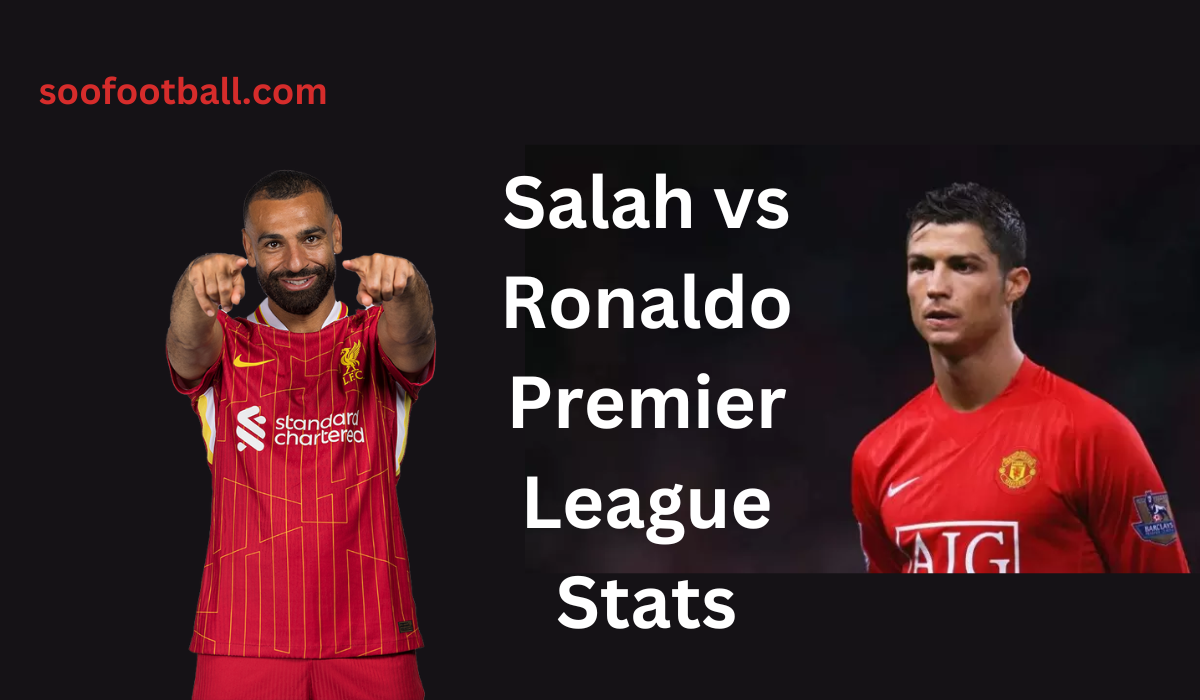
The debate between Mohamed Salah vs Cristiano Ronaldo Premier League Stats has often been fueled by passion, nostalgia, and loyalty. This article, however, sets aside the overall career legacies of these two stars and focuses solely on their Premier League contributions. Using verified statistics from their stints in England—Ronaldo’s time at Manchester United and Salah’s tenure at Liverpool—we present a logical and numbers-based comparison that lets the data speak for itself.
The Metrics & Limits
To keep the analysis fair and focused, we are comparing only the Premier League records of both players. By excluding data from LaLiga, Serie A, or other competitions, we remove the influence of different playing styles, opposition levels, and tactical systems across leagues. This approach allows us to concentrate on what each player has achieved in one of the world’s most competitive and physically demanding leagues.
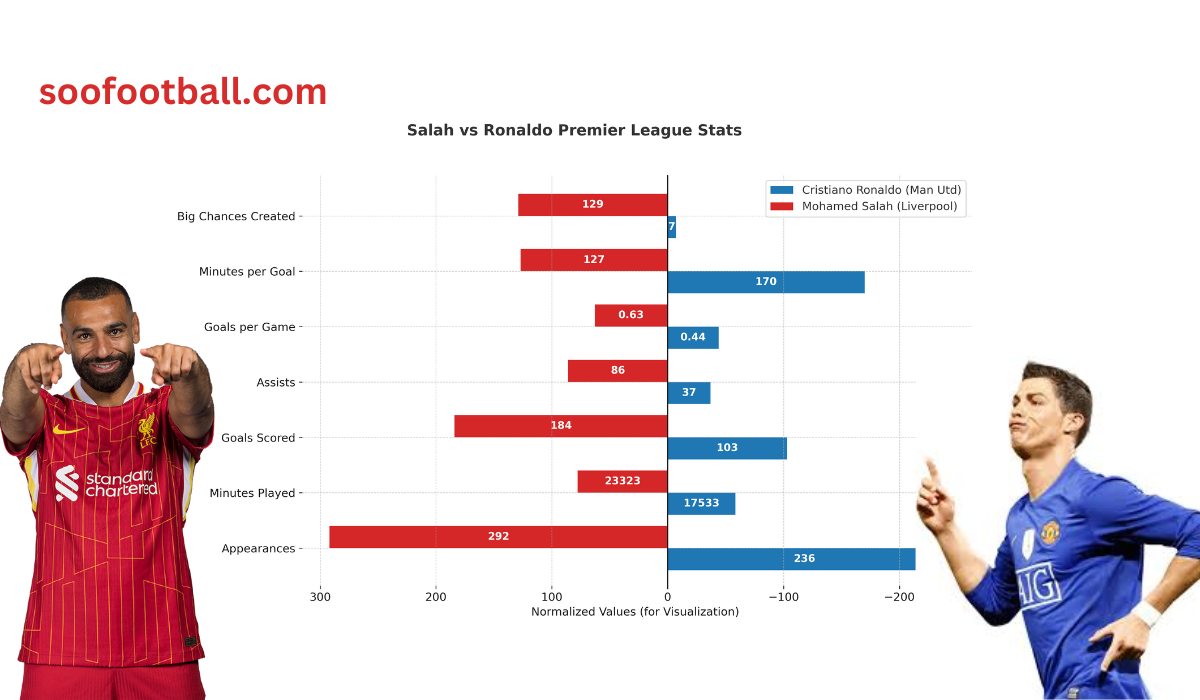
Our analysis revolves around several key metrics: the number of appearances, goals scored, assists provided, total minutes played, goals per game, minutes per goal, and overall goal involvement per 90 minutes. One metric that often sparks debate is “big chances created” — an indicator of a player’s creative contribution by generating high-quality goal-scoring opportunities. For context, official data shows that while Cristiano Ronaldo created 7 big chances during his Manchester United era, Mohamed Salah has created a staggering 129 big chances for Liverpool in the Premier League.
Salah vs Ronaldo Premier League Stats Analysis
When we look at the raw numbers, the differences become immediately apparent. Cristiano Ronaldo made 236 Premier League appearances for Manchester United, accumulating 17,533 minutes on the pitch. During that period, he scored 103 goals and registered 37 assists, averaging roughly 0.44 goals per game. In comparison, Mohamed Salah’s record at Liverpool includes 292 appearances and 23,323 minutes played. Salah’s numbers shine further with 184 goals and 86 assists, equating to an average of 0.63 goals per game. This means that Salah finds the net more frequently and also contributes more to his team’s overall attacking output.
A useful way to visualize these differences is by considering the number of minutes each player requires to score a goal. Ronaldo averaged about one goal every 170 minutes, while Salah’s efficiency stands at approximately one goal every 127 minutes. When combined with their assist records, Salah’s overall goal involvement per 90 minutes is significantly higher than Ronaldo’s in the Premier League. This stark contrast forms the backbone of our analysis.
To summarize these comparisons, consider the following table:
Metric
Cristiano Ronaldo (Man Utd)
Mohamed Salah (Liverpool)
Appearances
236
292
Minutes Played
17,533
23,323
Goals Scored
103
184
Assists
37
86
Goals per Game
0.44
0.63
Minutes per Goal
~170
~127
Big Chances Created
7
129
These numbers do more than simply display raw statistics; they tell a story of differing roles and contributions in the Premier League. While Ronaldo was known for his direct, clinical finishing at Manchester United, Salah’s game at Liverpool has been defined not only by his prolific scoring but also by his creative prowess. Salah’s high number of big chances created illustrates his integral role in building attacks and creating opportunities for his teammates—a dimension that Ronaldo’s Premier League numbers do not capture nearly as well.
Critical Evaluation – Questions Asked
This analysis naturally raises several thought-provoking questions. If some argue that Ronaldo’s overall career achievements are unparalleled, how do they address the fact that, when compared solely on Premier League records, Salah’s numbers suggest a higher scoring frequency and more creative output? Is it fair to compare a player’s global legacy with league-specific performance, or should we recognize that the Premier League represents a unique environment that highlights different strengths?
Another important consideration is the context in which these numbers were generated. The roles played by each star were shaped by the tactical systems at their respective clubs. Manchester United’s style during Ronaldo’s tenure might have limited his opportunity to create big chances, whereas Liverpool’s attacking philosophy has allowed Salah to flourish both as a scorer and a creator. Thus, one might ask: to what extent does a player’s environment influence these metrics? And if a player’s role is tailored to maximize their strengths, does that not deserve recognition in a fair comparison?
Lastly, these statistics prompt us to ponder the relationship between volume and impact. While Ronaldo’s lower big chance creation figure might seem underwhelming compared to Salah’s, his overall record—including pivotal goals in high-pressure situations—remains impressive. Yet, when evaluating pure Premier League performance, Salah’s numbers provide a compelling case for his remarkable influence on the game.
Logic Over Emotion
One of the common arguments from Ronaldo fans is that his overall career accomplishments and his ability to change the outcome of a match in critical moments should overshadow the raw numbers. However, by narrowing our lens to Premier League stats, the debate shifts. In this context, the data suggests that Salah has not only been more efficient in scoring but also more consistent in his creative contributions.
For instance, consider the discrepancy in big chances created: while Ronaldo’s 7 big chances may be viewed as a byproduct of his finishing-focused role, Salah’s 129 big chances underscore his dual-threat capability. The numbers force us to ask, how can one reconcile a player who excels in finishing with another who consistently builds attacking opportunities? And if we consider minutes per goal and overall involvement, Salah’s higher figures challenge any claim that Ronaldo’s record at Manchester United was the gold standard in the Premier League.
Moreover, the context of their appearances must be considered. Salah’s role at Liverpool involves more touches and creative freedom in a system designed to maximize his output, while Ronaldo’s contribution, although significant, was more limited in a different tactical setup. Does this mean one player is inherently better, or that their contributions are uniquely suited to their teams? The numbers suggest that, at least in the Premier League, Salah’s overall impact on his team’s attacking play has been more substantial.
Conclusion
Ultimately, this comparison of Salah vs Ronaldo Premier League Stats invites readers to reflect on what truly defines excellence in one of the world’s toughest leagues. The figures reveal that Mohamed Salah, with his higher goals per game, superior scoring efficiency, and outstanding creative contributions—particularly the big chances created—has left an indelible mark on the Premier League. Meanwhile, Cristiano Ronaldo’s achievements at Manchester United remain impressive in their own right but, when viewed through the narrow lens of league-specific statistics, present a very different narrative.
By asking the right questions—about context, role, and the nature of impact—this analysis encourages a balanced discussion that goes beyond overall career accolades. In the end, the numbers provide a logical framework for comparison that challenges us to appreciate the unique contributions of both players while recognizing that, in the Premier League, Mohamed Salah’s record stands out as exceptionally prolific and creatively influential.
The debate may never be conclusively resolved, but by focusing solely on Premier League data, we offer a fresh perspective on two of football’s modern icons. Whether you lean toward Ronaldo’s legendary status or appreciate Salah’s record-breaking output, the truth remains that both have shaped the league in remarkable ways—each in their own distinct manner.
Alexander-Arnold, 26, played in Liverpool’s title-clinching 5-1 victory over Tottenham Hotspur at Anfield, as the Reds equalled Manchester United’s 20 league titles. ..Continue Reading
The right-back joined in the celebrations but avoided speaking to media inside the stadium. Instead, on Monday, April 28, he posted several photos of himself and his teammates on social media, captioned: “For the City. For the Fans.”
His brother, Marcell, also added to the intrigue with what some fans believe was a cryptic Instagram story.
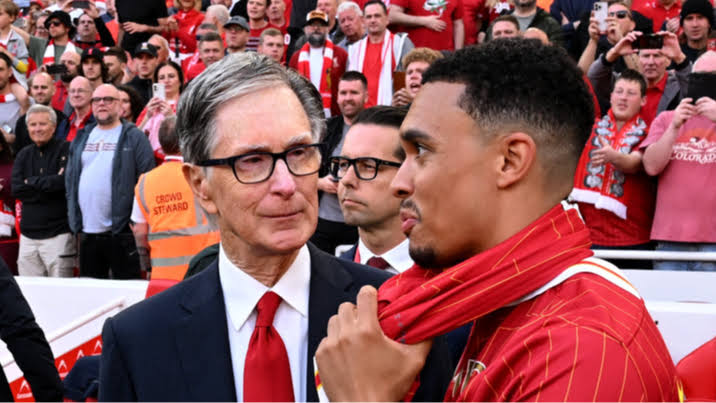
Amid growing speculation over his future, Alexander-Arnold was seen in conversation with Liverpool’s co-owner Henry, aged 75, during the jubilant scenes.
Though the exact details remain uncertain, forensic lip reader Nicola Hickling, speaking to OLBG, suggested Henry was advising the player to make the right decision.
Henry purportedly said: “You’ve been quiet. How did you get on?”
To which Alexander-Arnold replied: “Being sensible.”
The 75-year-old added: “I want you to do the right thing.”
The England defender answered and said: “Yeah, yeah.”
Henry continued: “Best way and don’t panic.”
Trent questioned: “Should I decide?”
The American then nodded slowly and exclaimed: “Absolutely,” before he turned and said: “Let them know.”
Alexander-Arnold responded with a nod during the exchange. It’s important to note that the exact details of the conversation remain unknown.
The future of the England star’s career next season remains uncertain.
Although he recently made a strong comeback from injury, scoring a decisive goal in the 1-0 victory over Leicester, speculation continues to lean toward the possibility of the Liverpool-born player joining Real Madrid once his contract expires on June 30.
On April 24, journalist Fabrizio Romano issued an update, he said: “The situation is still exactly the same between Trent, Liverpool, and Real Madrid. The deal for Trent Alexander-Arnold to Real Madrid is at the final stages, just waiting for the final stages. Just waiting to sign the contracts, just waiting for all the documents.”
One thing is certain: with the title race and relegation battle already settled, Alexander-Arnold’s future is set to dominate discussions in English football as the season draws to a close.
Throughout the campaign, the England international has remained largely silent regarding his plans for the seasons ahead.
But, on April 20 he was directly asked if he was going to leave Liverpool by Sky Sports’ Patrick Davidson, to which the right-back said: “Look, obviously, like I’ve said all season, I am not going to speak on my situation, I am not going to go into details but these days like today are always special: scoring goals, winning games, being close to winning titles and being in title races, they are special moments that will live for me forever. I am glad to be a part of them.”
The UEFA Champions League represents the pinnacle of European football, and for Bundesliga teams, qualifying for this prestigious competition is a significant achievement. Competing against Europe’s best clubs, Bundesliga sides not only get the chance to display their talent on the international stage but also gain access to substantial financial rewards and the opportunity to attract global attention. The allure of competing in the Champions League is undoubtedly one of the driving forces for clubs in Germany’s top football division, offering a platform for growth and success.
In terms of qualification, the number of Bundesliga teams that can enter the Champions League each season depends on several factors. Typically, the top four teams from the Bundesliga earn direct spots in the group stages of the Champions League. This structure remains relatively consistent, although recent changes in European football competitions have led to the possibility of extra spots based on the league’s performance in European tournaments. It is important to note that the top teams not only benefit from their domestic achievements but also their standing in UEFA’s country coefficient rankings, which influence how many spots each league can offer.
For Bundesliga teams, securing a spot in the Champions League is an important goal. The qualification process takes into account various factors such as league position, UEFA coefficients, and the potential for a fifth spot through special circumstances. Understanding the qualification process and the factors that influence the number of spots available for Bundesliga teams is essential for fans and clubs aiming for success in European football.
In this article, we will explore how many Bundesliga teams qualify for Champions League, the factors that influence this process, and the exciting possibilities for the future.
Standard Qualification Criteria for Bundesliga Teams
To understand how Bundesliga teams secure their spots in the UEFA Champions League, it’s important to first examine the standard qualification criteria. In general, the top positions in the Bundesliga determine which teams will represent Germany in Europe’s most prestigious competition. The league’s performance throughout the season directly affects the number of available spots, and the qualification process is designed to reward the best teams based on their domestic success.
At the heart of this process are the top four positions in the Bundesliga standings. The first four teams at the end of the season are typically awarded automatic spots in the group stage of the Champions League. This system has been in place for several years, and it reflects the competition’s emphasis on rewarding the highest-performing teams from each country. However, there are additional factors, such as UEFA’s country coefficient rankings, which can influence the exact number of teams a league can send to the tournament.
One important aspect to consider is the role of the UEFA coefficients in this process. Each national league is assigned a coefficient score based on its clubs’ performances in European competitions over a ten-year period. The higher the coefficient, the more spots the league earns. For example, the stronger performances of Bundesliga clubs in the Champions League and Europa League in recent years have helped Germany maintain its strong position in UEFA rankings. As a result, the Bundesliga can often secure four Champions League spots without issue.
The top four teams in the Bundesliga standings automatically qualify.
UEFA country coefficients impact the number of spots allocated to each league.
Special circumstances can provide additional spots, such as strong performances in other UEFA tournaments.
Clubs must meet the UEFA licensing requirements to participate in European competitions.
In addition to the top four spots, the fifth spot for a Bundesliga team can be achieved through a few exceptional circumstances, such as a strong performance by German clubs in European competitions or changes in UEFA’s rules. While the fifth spot has not been consistently available in every season, it remains a possibility for the future, depending on Germany’s overall standing in UEFA’s rankings.
While the general qualification process is relatively straightforward, it’s essential to understand how each factor contributes to the final outcome. The combination of strong league performance and historical success in European competitions allows Bundesliga teams to secure their places in the Champions League with relative consistency.
The Impact of UEFA Coefficients on Bundesliga’s Champions League Spots
UEFA coefficients are essential for determining how many teams from each country, including the Bundesliga, can qualify for the prestigious UEFA Champions League. These coefficients are based on the performance of clubs in European competitions over a ten-year period, which means that consistent success in Europe directly influences the number of spots a league is granted. The higher the coefficient, the more qualifying places the league earns in the tournament.
For the Bundesliga, the impact of UEFA coefficients has been significant. Strong performances by top clubs such as Bayern Munich, Borussia Dortmund, and RB Leipzig in the Champions League and Europa League over the years have boosted Germany’s coefficient. This consistent success has allowed the Bundesliga to maintain a position that typically guarantees four Champions League spots. The number of spots awarded to each country is directly influenced by these rankings, making the coefficient system a crucial element for German clubs looking to secure a spot in Europe’s most prestigious competition.
The Role of UEFA Coefficients
UEFA coefficients are calculated based on the performance of clubs in European competitions. For every win, draw, and overall success in these tournaments, points are earned for the league, which contribute to the overall coefficient. The higher the accumulated points over time, the more spots a league is allotted in the Champions League. For example, the Bundesliga’s historical success in both the Champions League and Europa League has played a pivotal role in securing its four Champions League spots.
Understanding the importance of UEFA coefficients is vital when considering how many Bundesliga teams qualify for the Champions League. The stronger the league’s performance in international competitions, the greater the chance of securing additional spots or maintaining the current allocation.
Case Study: Bundesliga Securing an Extra Champions League Spot
In certain seasons, the Bundesliga has been fortunate enough to secure an additional Champions League spot due to strong performances by its clubs in European competitions. This occurs when the league’s coefficient ranking increases, either because of consistently strong results in the Champions League or other European tournaments like the Europa League. As a result, UEFA may allocate an extra spot to the league, giving it the opportunity to send five teams to the Champions League.
A notable example of this occurred in the 2020-2021 season, when the Bundesliga was awarded an additional spot in the Champions League due to the consistent performance of German clubs in European competitions over the previous years. The success of teams like Bayern Munich and Borussia Dortmund in the Champions League and the strong performances of other clubs in the Europa League contributed significantly to Germany’s high UEFA coefficient.
This case study will demonstrate the season when the Bundesliga earned the extra Champions League spot and explain how the league’s performance in European competitions played a crucial role. By understanding the factors that contributed to this achievement, fans and experts can better appreciate the dynamics of UEFA’s decision-making process regarding league allocations.
Strong UEFA coefficient ranking and consistent European performance by Bundesliga clubs
The table highlights the five teams that qualified for the Champions League in the 2020-2021 season. The primary reason for this additional spot was the impressive performances of German teams in previous European competitions, which had a direct impact on the Bundesliga’s coefficient.
This example underscores the importance of a league’s consistent performance in international football and how it can impact the number of spots available for its clubs. The ability of Bundesliga teams to perform well in Europe not only raises the profile of the league but also ensures that German clubs continue to have multiple opportunities to compete at the highest level in European football.
Potential for a Fifth Bundesliga Team in the Champions League
The potential for a fifth Bundesliga team qualifying for the UEFA Champions League is an exciting prospect that depends on several factors, including Germany’s performance in European competitions and its position in UEFA’s coefficient rankings. Typically, the top four teams in the Bundesliga earn automatic spots in the Champions League, but there are certain conditions where the league could secure an additional spot. This possibility hinges largely on the overall success of German clubs in international tournaments like the Champions League and the Europa League.
One of the key ways for the Bundesliga to secure a fifth spot is through continued strong performances by its teams in European competitions. As Germany’s clubs such as Bayern Munich and Borussia Dortmund consistently perform well, they help boost the country’s UEFA coefficient, which could increase the number of Champions League spots for the league. With a higher coefficient, Bundesliga teams might have a chance to send a fifth club to the Champions League, giving more teams the opportunity to compete at the highest level in Europe.
The Role of the UEFA Coefficient in Securing Additional Spots
The UEFA coefficient plays a crucial role in determining how many teams each league can send to the Champions League. If the Bundesliga continues to perform well and maintain a high position in the UEFA rankings, it could potentially secure a fifth spot for one of its teams in the competition. Strong performances by German teams not only improve the league’s coefficient but also help increase the chances of additional spots becoming available.
While this extra spot is not yet a guarantee, the possibility remains open as long as the Bundesliga maintains strong performances in Europe. If this trend continues, it’s possible that how many Bundesliga teams qualify for Champions League could increase to five, providing more opportunities for German clubs to showcase their talent on the European stage.
The Challenges and Opportunities for Bundesliga Teams in the Champions League
Competing in the UEFA Champions League presents both significant challenges and unique opportunities for Bundesliga teams. As one of Europe’s most prestigious football competitions, the Champions League is an arena where the best teams from across the continent come together to fight for supremacy. For German clubs, the challenge lies not only in competing against Europe’s elite but also in maintaining consistent domestic performance while juggling the demands of European competition.
One of the biggest challenges for Bundesliga teams is balancing the intense domestic schedule with the rigorous demands of the Champions League. German clubs must be at their best in both competitions, which can be difficult with injuries, fixture congestion, and the physical toll of playing at such a high level. Additionally, the financial disparity between the Bundesliga and leagues like the English Premier League or La Liga often means that German teams have smaller budgets and fewer resources to invest in top-tier talent.
Challenge: Maintaining a balance between domestic league performance and Champions League demands.
Challenge: Competing against wealthier teams from leagues with larger budgets.
Opportunity: Increased global exposure and reputation through strong performances in the Champions League.
Opportunity: Financial rewards from deep runs in the competition, including prize money and sponsorship deals.
However, despite these challenges, there are numerous opportunities for Bundesliga teams in the Champions League. One of the main advantages is the exposure and recognition that comes with competing on the European stage. Performing well in the Champions League can elevate a team’s global reputation, attract better sponsorship deals, and help recruit top-quality players. Clubs like Bayern Munich have demonstrated how successful campaigns in Europe can lead to increased revenue, further investment in the team, and a more competitive domestic performance.
While the road to success in the Champions League is not without its obstacles, the potential rewards for Bundesliga teams are considerable. By maintaining a focus on both domestic and international success, these clubs can continue to thrive in Europe’s premier competition and enhance their standing in global football.
The Future of Bundesliga Teams in the Champions League
The future of Bundesliga teams in the UEFA Champions League looks promising, with continued success and growth both domestically and in European competitions. As the league continues to strengthen its position in UEFA’s rankings, there is potential for German clubs to secure additional spots in the prestigious tournament. The consistent performance of top teams like Bayern Munich, Borussia Dortmund, and RB Leipzig ensures that the Bundesliga will remain a strong contender in Europe.
While the qualification process remains competitive, the opportunity for a fifth Bundesliga team to qualify for the Champions League could become a reality if Germany maintains its high UEFA coefficient ranking. Strong performances from clubs across the league can continue to boost the country’s standing, providing more chances for clubs to participate in Europe’s elite competition.
In conclusion, understanding how many Bundesliga teams qualify for Champions League and the factors that influence this process highlights the complexity of the competition and the factors that contribute to Germany’s success in European football. The Bundesliga is on a solid path toward greater international recognition, and the future looks bright for German teams competing on the Champions League stage.