Liverpool have finally completed the signing of Swedish striker Alexander Isak from Newcastle United in a deal worth a British-record £125 million, bringing an end to one of the summer’s most protracted transfer sagas.
The 24-year-old joins on a six-year contract and becomes the Reds’ marquee arrival of the window. For Newcastle, the final package is closer to £130 million, with Isak reportedly waiving solidarity payments to help push the transfer through.
Isak Forces the Move
Isak made no secret of his desire to leave St James’ Park, going as far as refusing to play in order to secure the switch. Liverpool initially saw a £110 million bid rejected outright, but renewed talks in the final 24 hours led to a breakthrough agreement at the record fee.
Speaking after completing his move, Isak said: “I feel amazing. It’s been a long journey to get here, but I’m proud to be part of this club and everything it stands for. I can’t wait to meet my teammates, the fans, and get to work on the pitch.”
Liverpool’s Big Summer Statement
Isak’s arrival caps a huge window for Liverpool as they reinforce their title-winning squad. Florian Wirtz arrived from Bayer Leverkusen in another major deal, while Milos Kerkez and Jeremie Frimpong bolstered the full-back positions. Young defender Giovanni Leoni and forward Hugo Ekitike also joined, with goalkeeper Giorgi Mamardashvili finally making his pre-agreed switch.
Despite high-profile departures, including Luis Diaz, Jarell Quansah, and Darwin Núñez, Liverpool look stronger than ever in attack. Isak, their new record signing, is expected to be the long-term focal point of the frontline as Arne Slot’s side aim to dominate both domestically and in Europe.
Liverpool has been actively negotiating in recent weeks, determined to finalize the transfer of the talented German midfielder. ..Continue Reading
On Friday evening, reports surfaced that the Reds had submitted a fresh offer to Bayer Leverkusen for the 22-year-old, signaling their strong intent to secure the deal.
The Times journalist Paul Joyce wrote on social media: “Liverpool have submitted a revised offer to Bayer Leverkusen for Florian Wirtz of £113 million as talks continue between the clubs.
“The package guarantees Leverkusen £100 million with the additional £13 million in add-ons.”
But, just hours after that news, one current Liverpool player, in the shape of Federico Chiesa, has reportedly expressed his desire to depart in the summer.
Transfer specialist Fabrizio Romano said: “Understand Federico Chiesa’s priority for this summer transfer window is to return to Italy.
“Chiesa loves Liverpool but limited game time an issue and Italian clubs started contacts to be informed on potential deal conditions.”
Chiesa, 27, made the switch to Liverpool last summer from Juventus in a transfer reportedly valued at £10 million.
Unfortunately, the winger struggled with multiple injuries, preventing him from securing a consistent place in Arne Slot’s starting lineup.
Over the course of the season, Chiesa featured in just 14 matches across all competitions, contributing two goals and two assists.
Reflecting on his time at Liverpool, he recently described the past year as one filled with “many difficulties.”
As reported by The Express, the Italian told Corriere dello Sport: “In the first few months there were many difficulties.
“If you think that I arrived in Liverpool on August 26 and found myself catapulted to another planet, with other teammates, without having trained with them, but with a trainer, no friendlies, nothing.”
Chiesa added: “(I was up against) the Ballon d’Or, or one of the candidates for the award (in Mohamed Salah). “(On the left) there were Luis Diaz and (Cody) Gakpo. Slot also made me play as a nine.
“The desire to play was there, I put it aside, I understood the situation. I put aside every form of individualism.”
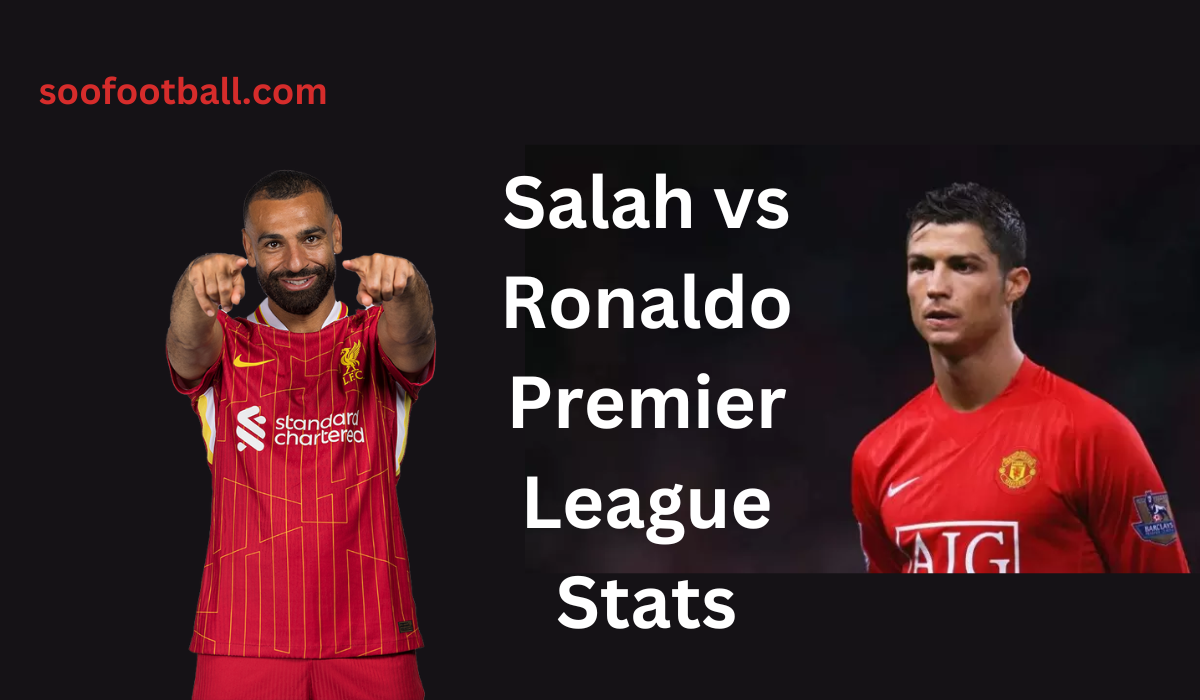
The debate between Mohamed Salah vs Cristiano Ronaldo Premier League Stats has often been fueled by passion, nostalgia, and loyalty. This article, however, sets aside the overall career legacies of these two stars and focuses solely on their Premier League contributions. Using verified statistics from their stints in England—Ronaldo’s time at Manchester United and Salah’s tenure at Liverpool—we present a logical and numbers-based comparison that lets the data speak for itself.
The Metrics & Limits
To keep the analysis fair and focused, we are comparing only the Premier League records of both players. By excluding data from LaLiga, Serie A, or other competitions, we remove the influence of different playing styles, opposition levels, and tactical systems across leagues. This approach allows us to concentrate on what each player has achieved in one of the world’s most competitive and physically demanding leagues.
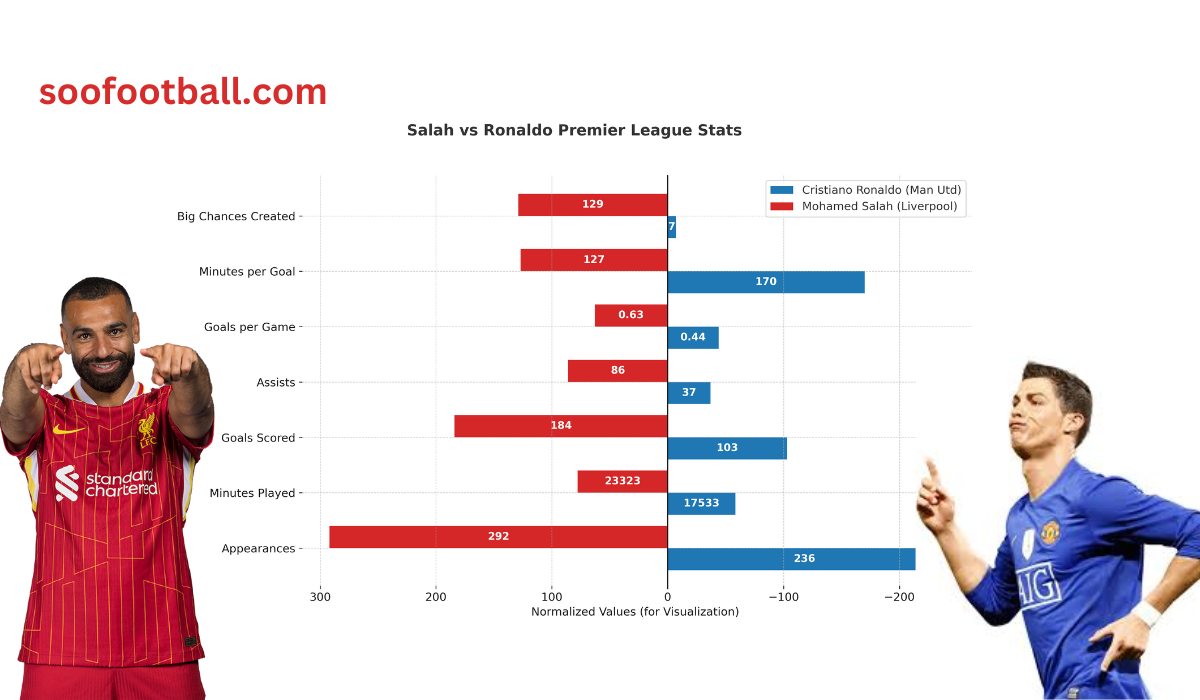
Our analysis revolves around several key metrics: the number of appearances, goals scored, assists provided, total minutes played, goals per game, minutes per goal, and overall goal involvement per 90 minutes. One metric that often sparks debate is “big chances created” — an indicator of a player’s creative contribution by generating high-quality goal-scoring opportunities. For context, official data shows that while Cristiano Ronaldo created 7 big chances during his Manchester United era, Mohamed Salah has created a staggering 129 big chances for Liverpool in the Premier League.
Salah vs Ronaldo Premier League Stats Analysis
When we look at the raw numbers, the differences become immediately apparent. Cristiano Ronaldo made 236 Premier League appearances for Manchester United, accumulating 17,533 minutes on the pitch. During that period, he scored 103 goals and registered 37 assists, averaging roughly 0.44 goals per game. In comparison, Mohamed Salah’s record at Liverpool includes 292 appearances and 23,323 minutes played. Salah’s numbers shine further with 184 goals and 86 assists, equating to an average of 0.63 goals per game. This means that Salah finds the net more frequently and also contributes more to his team’s overall attacking output.
A useful way to visualize these differences is by considering the number of minutes each player requires to score a goal. Ronaldo averaged about one goal every 170 minutes, while Salah’s efficiency stands at approximately one goal every 127 minutes. When combined with their assist records, Salah’s overall goal involvement per 90 minutes is significantly higher than Ronaldo’s in the Premier League. This stark contrast forms the backbone of our analysis.
To summarize these comparisons, consider the following table:
Metric
Cristiano Ronaldo (Man Utd)
Mohamed Salah (Liverpool)
Appearances
236
292
Minutes Played
17,533
23,323
Goals Scored
103
184
Assists
37
86
Goals per Game
0.44
0.63
Minutes per Goal
~170
~127
Big Chances Created
7
129
These numbers do more than simply display raw statistics; they tell a story of differing roles and contributions in the Premier League. While Ronaldo was known for his direct, clinical finishing at Manchester United, Salah’s game at Liverpool has been defined not only by his prolific scoring but also by his creative prowess. Salah’s high number of big chances created illustrates his integral role in building attacks and creating opportunities for his teammates—a dimension that Ronaldo’s Premier League numbers do not capture nearly as well.
Critical Evaluation – Questions Asked
This analysis naturally raises several thought-provoking questions. If some argue that Ronaldo’s overall career achievements are unparalleled, how do they address the fact that, when compared solely on Premier League records, Salah’s numbers suggest a higher scoring frequency and more creative output? Is it fair to compare a player’s global legacy with league-specific performance, or should we recognize that the Premier League represents a unique environment that highlights different strengths?
Another important consideration is the context in which these numbers were generated. The roles played by each star were shaped by the tactical systems at their respective clubs. Manchester United’s style during Ronaldo’s tenure might have limited his opportunity to create big chances, whereas Liverpool’s attacking philosophy has allowed Salah to flourish both as a scorer and a creator. Thus, one might ask: to what extent does a player’s environment influence these metrics? And if a player’s role is tailored to maximize their strengths, does that not deserve recognition in a fair comparison?
Lastly, these statistics prompt us to ponder the relationship between volume and impact. While Ronaldo’s lower big chance creation figure might seem underwhelming compared to Salah’s, his overall record—including pivotal goals in high-pressure situations—remains impressive. Yet, when evaluating pure Premier League performance, Salah’s numbers provide a compelling case for his remarkable influence on the game.
Logic Over Emotion
One of the common arguments from Ronaldo fans is that his overall career accomplishments and his ability to change the outcome of a match in critical moments should overshadow the raw numbers. However, by narrowing our lens to Premier League stats, the debate shifts. In this context, the data suggests that Salah has not only been more efficient in scoring but also more consistent in his creative contributions.
For instance, consider the discrepancy in big chances created: while Ronaldo’s 7 big chances may be viewed as a byproduct of his finishing-focused role, Salah’s 129 big chances underscore his dual-threat capability. The numbers force us to ask, how can one reconcile a player who excels in finishing with another who consistently builds attacking opportunities? And if we consider minutes per goal and overall involvement, Salah’s higher figures challenge any claim that Ronaldo’s record at Manchester United was the gold standard in the Premier League.
Moreover, the context of their appearances must be considered. Salah’s role at Liverpool involves more touches and creative freedom in a system designed to maximize his output, while Ronaldo’s contribution, although significant, was more limited in a different tactical setup. Does this mean one player is inherently better, or that their contributions are uniquely suited to their teams? The numbers suggest that, at least in the Premier League, Salah’s overall impact on his team’s attacking play has been more substantial.
Conclusion
Ultimately, this comparison of Salah vs Ronaldo Premier League Stats invites readers to reflect on what truly defines excellence in one of the world’s toughest leagues. The figures reveal that Mohamed Salah, with his higher goals per game, superior scoring efficiency, and outstanding creative contributions—particularly the big chances created—has left an indelible mark on the Premier League. Meanwhile, Cristiano Ronaldo’s achievements at Manchester United remain impressive in their own right but, when viewed through the narrow lens of league-specific statistics, present a very different narrative.
By asking the right questions—about context, role, and the nature of impact—this analysis encourages a balanced discussion that goes beyond overall career accolades. In the end, the numbers provide a logical framework for comparison that challenges us to appreciate the unique contributions of both players while recognizing that, in the Premier League, Mohamed Salah’s record stands out as exceptionally prolific and creatively influential.
The debate may never be conclusively resolved, but by focusing solely on Premier League data, we offer a fresh perspective on two of football’s modern icons. Whether you lean toward Ronaldo’s legendary status or appreciate Salah’s record-breaking output, the truth remains that both have shaped the league in remarkable ways—each in their own distinct manner.