[ad_1]
The summer mess surrounding Alexander Isak and Yoane Wissa has sparked a familiar outrage. These players were labelled “unprofessional,” “disgraceful,” even “disgusting,” as Alan Shearer put it regarding their refusal to play to force moves. Yet strangely, when clubs banish players and treat them as surplus by forcing them to train alone or sit out indefinitely, most of the footballing world shrugs it off as simply “business.” Or they simply go mute and never discuss it. Why this glaring double standard?
When a star player is frozen out, training in isolation or with the youth, the tone is rarely judgmental. It’s rationalised as assertive management or justified discipline. Take Dedryck Boyata, ex-Celtic, who at Club Brugge reportedly told him he might as well be “a hyper-contagious disease.” He was made to change in a cleaning cupboard and train with kids. Yet, few condemned the club outright.
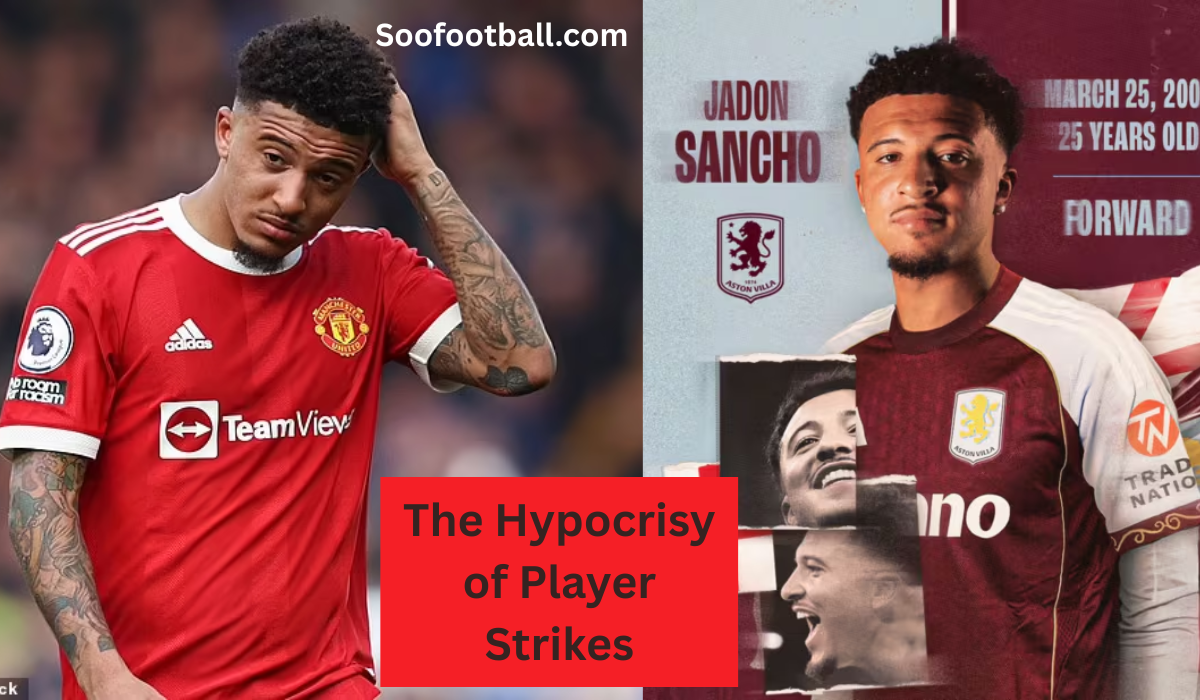
Consider Manchester United’s 2025 “bomb squad” saga. Players like Jadon Sancho and Antony hinted at wanting out, and as a result, were excluded from the preseason and forced to train away from the squad. Yet when manager Ruben Amorim addressed it, he framed it as professionalism, offering them a pathway back if the price was right.
Indeed, Planet Football and GiveMeSport have roundups of players sent to train alone (including Aubameyang, Sancho, Virgil van Dijk, Mkhitaryan) framing each incident as a disciplinary or performance issue, rarely as career sabotage.
In stark contrast, when players like Isak or Wissa refuse to train in pursuit of a better situation, they are branded “unprofessional” or even “disgusting,” their act of agency vilified.
A Case For Players
The fundamental imbalance in football is that clubs hold institutional power (contracts, payments, and control over game time) while players have little leverage. When clubs bench players, it’s seen as maintaining standards. When players refuse to play, it’s seen as rebellion. But in a system built around contractual servitude, isn’t withholding service one of the few tools still available to a player?
Let’s look again: Isak and Wissa wanted to play at the highest level and made headlines for their refusal to swallow a status as perpetual second fiddle. Meanwhile, Boyata’s treatment felt punitive beyond professionalism, a player physically isolated.
There’s also fan backlash to consider. On message boards like Reddit, many argue that players have little power, and going on strike is often a last resort to protect health, reputation, or future prospects. One user said players needed “agency” more than anything, because “they are the ones making it happen every week.”
My Final Thought On The Matter
That doesn’t mean players are always in the right. Contractually, they owe the clubs effort, but the playing field isn’t even. Clubs freeze players in isolation while still paying their wages, as punishment. When players push back, especially those at peak career stages, they’re punished socially, blamed publicly, and even villainised. We forgive professional power for its authority, but condemn individuals for using their own.
I am not saying players should always win disputes by force. But we do need a reality check. The current system makes strikes feel like the only language players can speak. Collective bargaining agreements don’t exist, and unions hold negligible sway. Until football balances power better, the narrative must shift. When a player fights, maybe worry less about broken etiquette and more about why he felt forced to.
It’s time we question this embedded double standard. A club discarding a player is rarely seen as problematic. But a player pushing for leverage? That’s villainy. Yet both actions are about power. One is institutional and normalised, but the other is individual and seen as evil.
If football is to remain human, it must recognise that players are not commodities. They are people with finite careers and ambitions. We should listen before we judge. Until that empathy becomes standard, the next time a player “goes on strike,” perhaps we should ask not “how dare they,” but “why did it come to this?”
[ad_2]
Source link