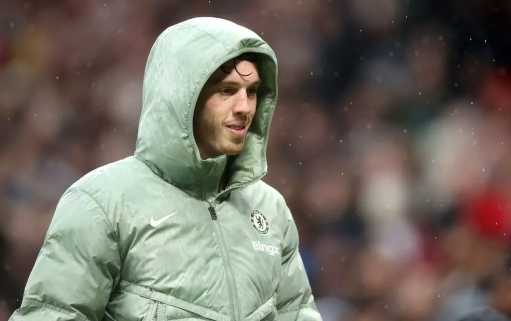
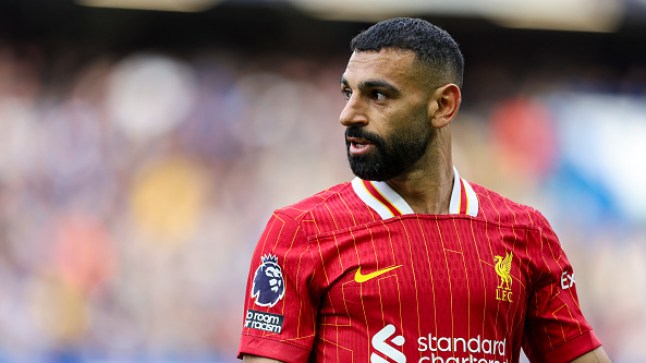
The England forward is expected to remain out of action until at least next month, with surgery no longer being considered. ..Continue Reading
The injury has affected the 23-year-old since the start of the 2025/26 campaign, limiting him to just 140 minutes of play since September.
Back in August, he was pulled from the starting line-up against West Ham United shortly before kick-off, then spent two weeks receiving treatment before returning to score off the bench against Brentford last month.
Just a week later, he was substituted early in the defeat to Manchester United and has missed the last four matches.
Enzo Maresca ruled out any chance of him featuring in last weekend’s win over Liverpool, and his honest remarks suggest Palmer might still be unavailable after the October international break.
“Cole is still out,” he confessed last Friday. “I don’t have any updates at the moment. We have a meeting this week to see how he is, and we will then decide [whether he can return after the international break].”
While many Chelsea players have been away on international duty recently, Palmer also appears to have left west London.
Photos showing the Chelsea talisman with fans in Dubai have appeared online. It’s unclear why he traveled to the Middle East, though some believe he may have gone to see a specialist.
Another possibility is that he was given time off after several weeks of being unable to train at Cobham.
According to the Daily Mail, Palmer is expected to be out for weeks rather than months, with a return in November now likely, as the injury isn’t serious enough to need surgery.
There’s another two-week domestic break scheduled for November, making it unlikely that Palmer will be allowed to leave Chelsea and head to St George’s Park.
Comments from Thomas Tuchel have added to the concern, with the England boss describing the issue as “chronic”.
Palmer has not yet received a Three Lions call-up this season, and that situation seems unlikely to change before the year ends.
Given his recent impact, Chelsea will be keen to see Palmer back on the pitch soon—but not at the risk of worsening his condition.
Though he didn’t play in the win over Liverpool, Palmer was actively involved in the post-match celebrations after their thrilling victory against the Premier League champions.
Following a moment with match-winner Estevao Willian, Jorrel Hato jumped onto Palmer with excitement, which immediately triggered discomfort in his groin.
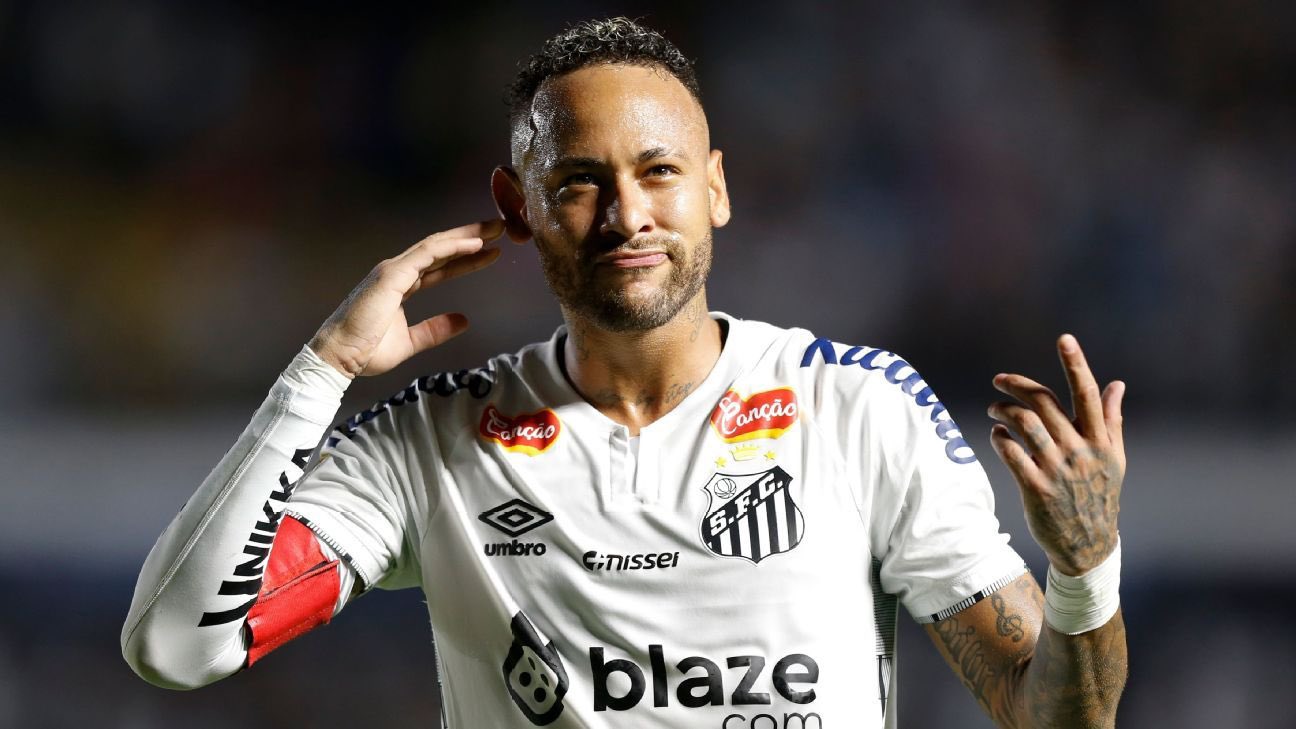
Barcelona and PSG legend Neymar bypassed his former teammate Lionel Messi when naming the true ‘king’ of football.
Throughout his career, Neymar has played alongside some of the greatest footballers to ever grace the pitch, including Luis Suarez, Kylian Mbappe, and Ronaldinho.
Arguably, Messi is Neymar’s greatest teammate, with whom he shared the field at both Barcelona and Paris Saint-Germain, accumulating 206 appearances together. ..Continue Reading
Despite this, Messi isn’t the player Neymar idolizes as the ultimate king of football. The 33-year-old is certain about who holds that prestigious title.
Since the early days of his career, many football fans have predicted Neymar would become one of the best to ever play the game, often comparing him to Cristiano Ronaldo and Messi.
However, Neymar stunned the world by leaving Barcelona to join Ligue 1 side Paris Saint-Germain, a move that didn’t quite meet the expectations set by his record-breaking transfer fee.
This earned Neymar the moniker ‘the prince who didn’t want to be a king.’ When asked about the title, Neymar revealed who he truly considers the king of football.
“It’s not that I didn’t want to be a king, it’s that for me there is only one king and that is Pelé,” Neymar explained to ‘TheGrefg’ Youtube channel
“Many things happened, I had many injuries that cost me a lot in my career and well, God wanted it that way. I have no reason to be sad, on the contrary.
“I am very happy with my story and my life. I achieved almost everything I dreamed of, and I even achieved things I never dreamed of. I am very grateful to God for changing my life, that of my family and my friends . That is the most important thing for me.”
Pele is widely considered one of the greatest Brazilian players of all time, making it no surprise that Neymar idolizes him.
Growing up, Neymar would have watched countless clips of Pele leading Brazil to three World Cup victories, which undoubtedly left a lasting impression on him.
Jude Bellingham didn’t hesitate when asked which football legend he would have loved to play alongside.
The 21-year-old midfielder has become a key figure at Real Madrid since his high-profile transfer from Borussia Dortmund.
Surrounded by world-class talent—including Vinicius Jr, Rodrygo, and Kylian Mbappe in attack, as well as Eduardo Camavinga, Federico Valverde, and Aurélien Tchouameni in midfield—he plays among some of the best in the game. ..Continue Reading
Yet, if given the chance to share the pitch with any football icon from history, Bellingham’s choice would be clear: former Real Madrid and France star Zinedine Zidane.
After being asked the question in an interview with FIFA, the England midfielder said: “Zidane, easily. I’d just give him the ball and watch him.”
He added: It’d be like watching YouTube up close. Mind you, I wouldn’t want to play a whole season with him because I wouldn’t get any minutes.”
Bellingham opened up on an admiration for Zidane that stems from his childhood, when his dad, Mark, used to wear the colours of Los Blancos.
“My dad always wore a Madrid [shirt] around the house, with ‘Zidane 5’ on the back, which is funny because it’s kind of gone full circle and he gifted it to me when I joined in the summer.,” he told UEFA in 2024.
“I was like. ‘Who’s this guy that you’re always wearing on your shirt?’ And he was like, ‘Well, when you’re old enough, we’ll get you onto YouTube.’ Now that I wear the No5, it’s ended up being quite a significant story.”
In 2021, Bellingham included Zidane in his ideal five-a-side lineup.
During an interview at the Sports Personality of the Year awards, he selected the legendary French midfielder alongside his former Borussia Dortmund teammates Erling Haaland, Marco Reus, and Jadon Sancho.
More recently, Zidane expressed admiration for Bellingham, using his locker before a Real Madrid legends’ match against Porto and praising the young midfielder’s talent.
“From five to five, we are not the same age but the same number,” he said before kick-off. “He is spectacular, we are lucky to have him at Real Madrid, he is very good and I hope he brings us many trophies.”
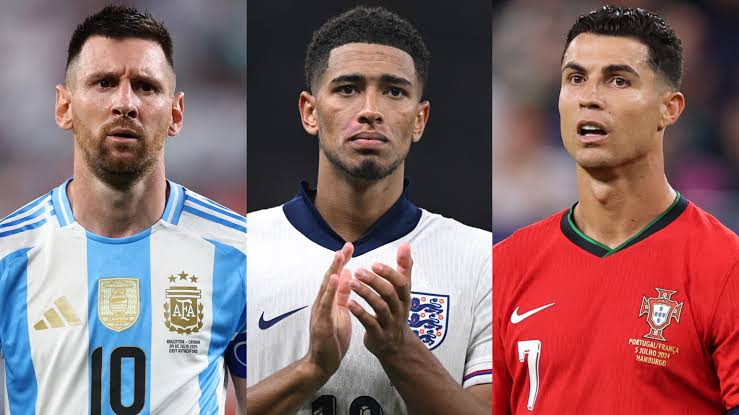
The two stars are leading contenders for the award after delivering exceptional performances for both club and country. ..Continue Reading
Yamal and Dembele faced off in the UEFA Nations League semi-final between Spain and France, where Yamal stole the spotlight with a brace in Spain’s thrilling victory.
After playing a key role in Spain’s recent international success, another strong performance could further strengthen Yamal’s case to become the youngest-ever Ballon d’Or winner.
The 17-year-old sensation was instrumental in Barcelona’s league and cup victories, contributing numerous goals and assists throughout the season.
Meanwhile, Dembele remains a strong contender after enjoying the best campaign of his career, scoring consistently and helping Paris Saint-Germain secure a major European title.
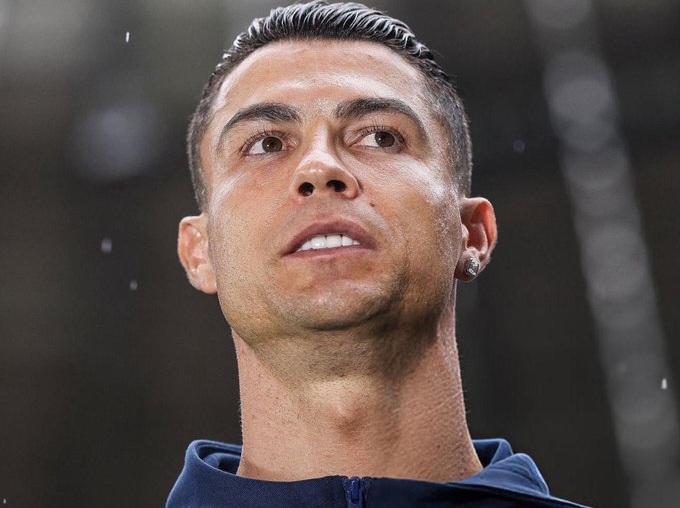
Ronaldo, a multiple-time Ballon d’Or winner, has now weighed in on the debate, outlining his personal criteria for selecting the rightful recipient of football’s most prestigious individual honor.
Speaking in a press conference ahead of the Nations League final between Portugal and Spain, Ronaldo said: “The individual awards have lost some consensus; I can’t say anything about who should win. In my opinion, those who stand out and win the Champions League should win.
“But there is no consensus. I don’t believe much in individual awards because I know what goes on behind the scenes. Lamine could win, like Dembele or Vitinha, other emerging players… But individual awards are irrelevant.”
The showdown at the Allianz Arena marks the first time Ronaldo will face Lamine Yamal, who is 23 years his junior and was only a year old when Ronaldo claimed his first Ballon d’Or.
Reflecting on his own rise to stardom at Manchester United, Ronaldo advised the media to avoid placing excessive expectations on Yamal as he continues to develop.
“Lamine Yamal? I ask you to let the boy grow for the good of football,” he stated.
“Let him grow calmly and take the pressure off him. You can help him by leaving him alone because he doesn’t lack talent.”
During an in-depth interview with France Football, the Liverpool star reflected on his illustrious career at Anfield and shared insights into a past ‘tension’ with a former teammate. ..Continue Reading
As one of the most renowned left-footed players in modern football, Salah was asked to pick the greatest left-footed player in history.
He opted for Premier League icon Ryan Giggs over James Rodriguez and Riyad Mahrez, citing Giggs’ impressive longevity.
When comparing further attacking talents, Salah chose Angel Di Maria—who played for Manchester United and Paris Saint-Germain—over Giggs, along with former Real Madrid playmakers Gareth Bale and Mesut Ozil, as well as Dutch winger Arjen Robben.
The conversation then shifted to Antoine Griezmann, with Salah preferring the Atletico Madrid forward over Di Maria.
He extended that preference to Griezmann over Barcelona legend Hristo Stoichkov before ultimately selecting Rivaldo, Brazil’s 2002 World Cup-winning star.
Faced with a choice between Rivaldo and Maradona, Salah sided with the late Argentine icon. That led to the ultimate question—Maradona or Messi? Without hesitation, Salah picked the eight-time Ballon d’Or winner.
In a lighthearted finale, Salah was asked to compare Messi to himself, and he amusingly conceded that he would choose the Barcelona legend.
Salah has enjoyed a phenomenal season, scoring 33 goals in all competitions while playing a crucial role in Liverpool’s Premier League triumph.
He also expressed his ambition to win the Ballon d’Or before retiring, a goal that remains firmly in his sights.
“It’s not in my hands, but obviously, one day I would like to win the Ballon d’Or for my people,” he said. “When you come from a village in Egypt, as a child, it’s difficult to dream of the Ballon d’Or.
“It was when I came to Liverpool that I started to think that, maybe, one day… But if I don’t win it, my career will still be successful”
The Bundesliga is one of the most prestigious and competitive football leagues in the world, attracting millions of fans from Germany and beyond. Known for its high-intensity matches, passionate supporters, and a rich history of legendary clubs, the league plays a crucial role in the global football landscape. Each season, teams compete for the coveted Meisterschale (championship trophy), while others fight to avoid relegation or secure European competition spots.
A common question among football fans is: when does the Bundesliga season end? Understanding the timeline of the Bundesliga season is essential for supporters, players, and stakeholders. The league operates on a structured schedule that aligns with the European football calendar, typically starting in late summer and concluding in the following spring. However, several factors, including international tournaments and winter breaks, can influence the exact dates.
Unlike some other top European leagues, the Bundesliga consists of 18 teams rather than 20, resulting in a slightly shorter season. This format means that each club plays 34 matches (home and away fixtures against every opponent), making every game critical in determining final standings. The season is divided into two halves, separated by a winter break, which is a unique feature of German football. This pause allows players to recover and clubs to adjust strategies before the decisive second half of the campaign.
As we delve into the specifics of the Bundesliga season, including key dates, historical trends, and external factors that affect its conclusion, it becomes evident why fans eagerly anticipate the season finale. The final matchday often brings thrilling title races, dramatic relegation battles, and unforgettable football moments, making it a highly anticipated event in the sporting calendar.
Key Dates for the 2024/25 Bundesliga Season
The Bundesliga season follows a well-structured calendar, beginning in late summer and concluding in spring. The league’s scheduling is carefully planned to align with international competitions and domestic cup fixtures, ensuring a balanced and competitive format. Each season, the league’s governing body, the Deutsche Fußball Liga (DFL), announces the official start and end dates, allowing clubs and fans to prepare accordingly.
For the 2024/25 season, the Bundesliga will kick off on August 23, 2024, marking the beginning of another intense competition among Germany’s top clubs. The league’s format consists of 34 matchdays, spread across a span of approximately nine months, before reaching its conclusion in May 2025. While the final matchday is scheduled for May 17, 2025, external factors such as fixture rescheduling or European club competitions may slightly alter the timeline.
Additionally, the Bundesliga incorporates a mid-season winter break, which is a distinct characteristic compared to other major European leagues. This break provides players with essential rest and recovery time, allowing teams to prepare for the second half of the campaign.
Season Start: August 23, 2024
Winter Break Start: December 22, 2024
Winter Break End (Season Resumes): January 12, 2025
Final Matchday: May 17, 2025
DFB-Pokal Final: May 24, 2025
Relegation Playoffs: May 22 & 27, 2025
The winter break, which typically lasts around three weeks, is an essential feature of the Bundesliga. Unlike leagues such as the Premier League, which continues through the holiday season, the Bundesliga allows players to rest and recharge before heading into the decisive part of the season.
Moreover, the relegation playoffs, played between the third-bottom Bundesliga club and the third-placed 2. Bundesliga team, determine which team secures a spot in the top division for the following season. These matches add to the league’s excitement, often producing dramatic results.
As the season progresses, clubs focus on securing their objectives, whether it’s fighting for the title, European qualification, or top-flight survival. The final matchday is particularly significant, as it often decides the champion, the relegated teams, and the clubs earning a spot in Champions League and Europa League competitions.
The Impact of the Winter Break on the Season’s Schedule
The Bundesliga is unique among Europe’s top leagues due to its extended winter break, which plays a crucial role in shaping the second half of the season. While many leagues continue playing through December and January, German football authorities prioritize player welfare and match quality by implementing a mid-season pause. This break allows teams to rest, recover, and strategize for the remaining fixtures, often influencing the outcome of the league standings.
Why the Winter Break Matters
The winter break is more than just a pause in play—it impacts the rhythm of the competition and provides struggling teams with an opportunity to reset. Managers use this period to evaluate their squads, make tactical adjustments, and sometimes introduce new signings from the January transfer window. Additionally, the break benefits players physically, reducing the risk of injuries caused by fixture congestion.
Historically, teams that enter the break in strong form often continue their momentum, while those in poor form have the chance to regroup. Clubs also take advantage of the break to organize mid-season training camps, usually in warmer climates, to maintain fitness levels and refine tactical plans.
The scheduling of the Bundesliga ensures that every club has an equal opportunity to benefit from this period. However, the break also means that the season extends into May, leading many fans to ask, when does the Bundesliga season end – as they anticipate the final matchdays.
As the league resumes in January, teams face a packed schedule with high-stakes fixtures that determine final placements. The winter break, therefore, serves as both a reset button and a strategic advantage, making it one of the most important aspects of German football’s structure.
Historical End Dates of Recent Bundesliga Seasons
The Bundesliga has followed a consistent seasonal structure for decades, typically concluding in mid-to-late May. However, various factors, such as international tournaments, global disruptions, and scheduling adjustments, have occasionally led to minor changes in the league’s end date. Reviewing historical season conclusions provides valuable insight into how the league maintains its competitive flow while adapting to external influences.
In most cases, the season lasts approximately nine months, starting in August and ending in May, with a mid-season winter break factored in. This format ensures alignment with other major European leagues and facilitates the smooth scheduling of UEFA Champions League, Europa League, and international competitions.
Season
Start Date
End Date
Champion
2023/24
August 18, 2023
May 18, 2024
Bayer Leverkusen
2022/23
August 5, 2022
May 27, 2023
Bayern Munich
2021/22
August 13, 2021
May 14, 2022
Bayern Munich
2020/21
September 18, 2020
May 22, 2021
Bayern Munich
2019/20
August 16, 2019
June 27, 2020
Bayern Munich
2018/19
August 24, 2018
May 18, 2019
Bayern Munich
The 2019/20 season was significantly impacted by the COVID-19 pandemic, leading to an extended break and a delayed conclusion in June instead of the usual May timeframe. Similarly, the 2020/21 season started later than usual, as the previous season’s delay affected the league’s scheduling.
Despite occasional disruptions, the Bundesliga has maintained a structured and predictable season format, ensuring competitive integrity. The winter break remains a crucial element, allowing players and clubs to prepare effectively for the second half of the campaign.
Looking at past seasons, it is evident that while the Bundesliga follows a standardized timeline, certain factors can still influence its conclusion. However, fans can generally expect the season to wrap up in May, barring exceptional circumstances.
Factors Influencing the Season’s Conclusion
The Bundesliga season is carefully planned to follow a consistent schedule, but several external factors can influence its actual conclusion. While the league traditionally ends in May, occasional adjustments may be required due to unforeseen circumstances. These factors can impact the fixture list, match rescheduling, and overall league progression, sometimes leading fans to ask, when does the Bundesliga season end?
Major Factors Affecting the Bundesliga’s End Date
One of the most significant factors is the international tournament calendar. In years when the UEFA European Championship or FIFA World Cup takes place, domestic leagues must align their schedules to ensure players have adequate rest and preparation time. This often results in a tighter league calendar, with midweek fixtures becoming more frequent to maintain the usual May conclusion.
Weather conditions can also impact the league’s end date. While Germany does not typically experience extreme disruptions, heavy snowfall during December and January can lead to match postponements. If multiple games are delayed, the league must find available dates for rescheduling, which can create fixture congestion later in the season.
European club competitions also play a role in scheduling flexibility. Teams competing in the Champions League or Europa League often require fixture adjustments, especially in the later rounds when matches become more demanding. The deeper a Bundesliga team progresses in Europe, the more likely they are to request slight changes to their domestic schedule.
In rare cases, unexpected global events—such as the COVID-19 pandemic—have led to league-wide postponements and rescheduling efforts. The 2019/20 season, for example, had to extend into late June, marking one of the few instances where the league’s standard timeline was altered significantly.
Ultimately, while the Bundesliga strives to maintain its traditional timeline, multiple factors can influence its exact end date. However, with careful planning and flexibility, the league ensures that disruptions remain minimal, preserving the integrity of the competition.
Preparing for the Season Finale: What Fans Should Know
As the Bundesliga season nears its conclusion, fans eagerly anticipate the final matchdays, which often bring high-stakes drama, title deciders, and relegation battles. Whether supporting a team in the championship race, European qualification fight, or relegation struggle, fans need to be well-prepared to enjoy the season finale to the fullest.
In addition to the on-field action, the closing stages of the Bundesliga also impact ticket availability, match scheduling, and club celebrations, making it crucial for supporters to stay informed about key developments.
Secure Tickets Early: Demand for tickets skyrockets as the season nears its end, especially for decisive fixtures. Fans should purchase tickets well in advance to avoid disappointment.
Follow the League Standings Closely: The final weeks of the season determine title winners, European qualifiers, and relegated teams, making every match critical. Checking the standings regularly helps fans stay updated on their club’s position.
Be Aware of Playoff Scenarios: The Bundesliga features relegation playoffs, where the 16th-placed team in the top division faces the third-placed team from the 2. Bundesliga. These matches can have major implications for the following season.
Stay Updated on Fixture Changes: TV broadcasting rights and European competition schedules can lead to last-minute changes in match timings. Fans should check official sources for confirmed dates and kickoff times.
Prepare for Club Celebrations: If a team wins the Bundesliga, major parades and celebrations are organized in their home city. Knowing when and where these events take place allows fans to participate in the festivities.
While the Bundesliga finale is an exciting time, it also comes with logistical challenges for fans. Popular venues experience an increase in ticket demand, accommodation bookings, and travel expenses, making early planning essential.
Additionally, emotions run high during the last few matchdays, as clubs fight for their goals. Whether it’s a dramatic title-clinching victory, a last-minute European qualification, or a heartbreaking relegation battle, the Bundesliga’s closing stages never fail to deliver excitement.
Understanding the league format, being aware of critical dates, and staying engaged with official updates can help fans fully experience the thrill of the Bundesliga’s final weeks. With proper preparation, they can ensure that they don’t miss out on some of the most memorable moments of the season.
What to Expect as the Bundesliga Season Ends
As the Bundesliga season draws to a close, fans, clubs, and players reflect on the journey while eagerly anticipating the final outcomes. The last matchdays bring intense battles for the championship, European qualification, and relegation survival, ensuring that excitement remains high until the very end. Whether it’s a dominant club securing another league title or an underdog team fighting to avoid relegation, the conclusion of the season is always filled with drama.
One of the most anticipated aspects of the final matchdays is the title race. In recent years, the Bundesliga has witnessed thrilling finishes, with clubs competing fiercely to lift the prestigious Meisterschale. Even when the champion is determined before the final game, the competition for Champions League and Europa League spots remains intense, often decided in the last minutes of the season.
For teams struggling at the bottom of the table, the stakes are just as high. Avoiding relegation is a priority for clubs looking to maintain their Bundesliga status, and the relegation playoff adds another layer of excitement. The battle for survival can often be as gripping as the race for the title, with unexpected results shaping the future of clubs.
Fans frequently ask, when does the Bundesliga season end, especially as teams approach the decisive final rounds. The 2024/25 season is set to conclude on May 17, 2025, marking the culmination of months of competition. As the league wraps up, supporters will celebrate their club’s success or begin looking ahead to the next campaign, knowing that German football never fails to deliver thrilling moments.
With the final whistle of the season, the focus shifts to transfer windows, managerial changes, and preparations for the next campaign, keeping Bundesliga enthusiasts engaged even after the matches have ended.