برچسب: Who

  • Chelsea pushing to sign £418k-a-week star who Guardiola holds in “high regard”

    Chelsea pushing to sign £418k-a-week star who Guardiola holds in “high regard”

    [ad_1]

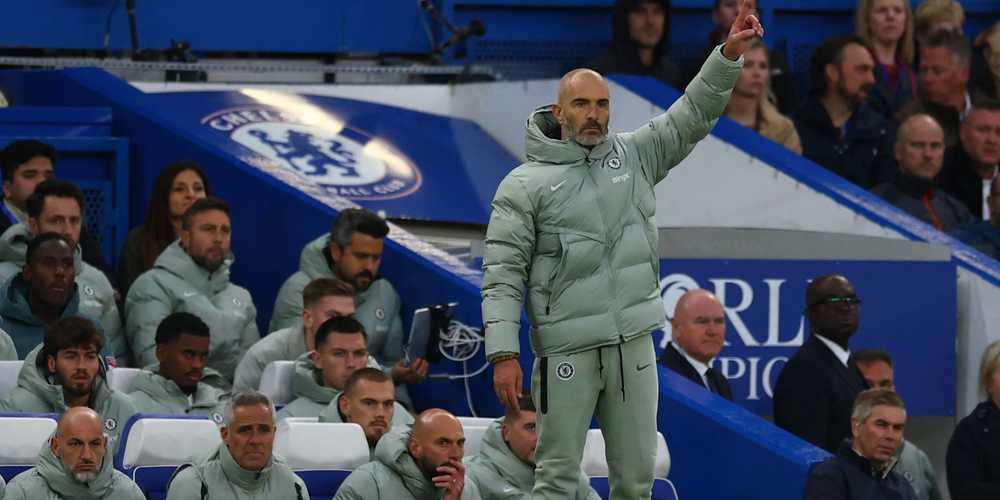
    Enzo Maresca is preparing for a pivotal Premier League encounter against Nottingham Forest — a fixture that carries a few intriguing narratives. ..Continue Reading

    [ad_2]

    Source link

  • Andre Onana or Altay Bayindir: Man United have decided who they want to offload – Man United News And Transfer News

    Andre Onana or Altay Bayindir: Man United have decided who they want to offload – Man United News And Transfer News

    [ad_1]


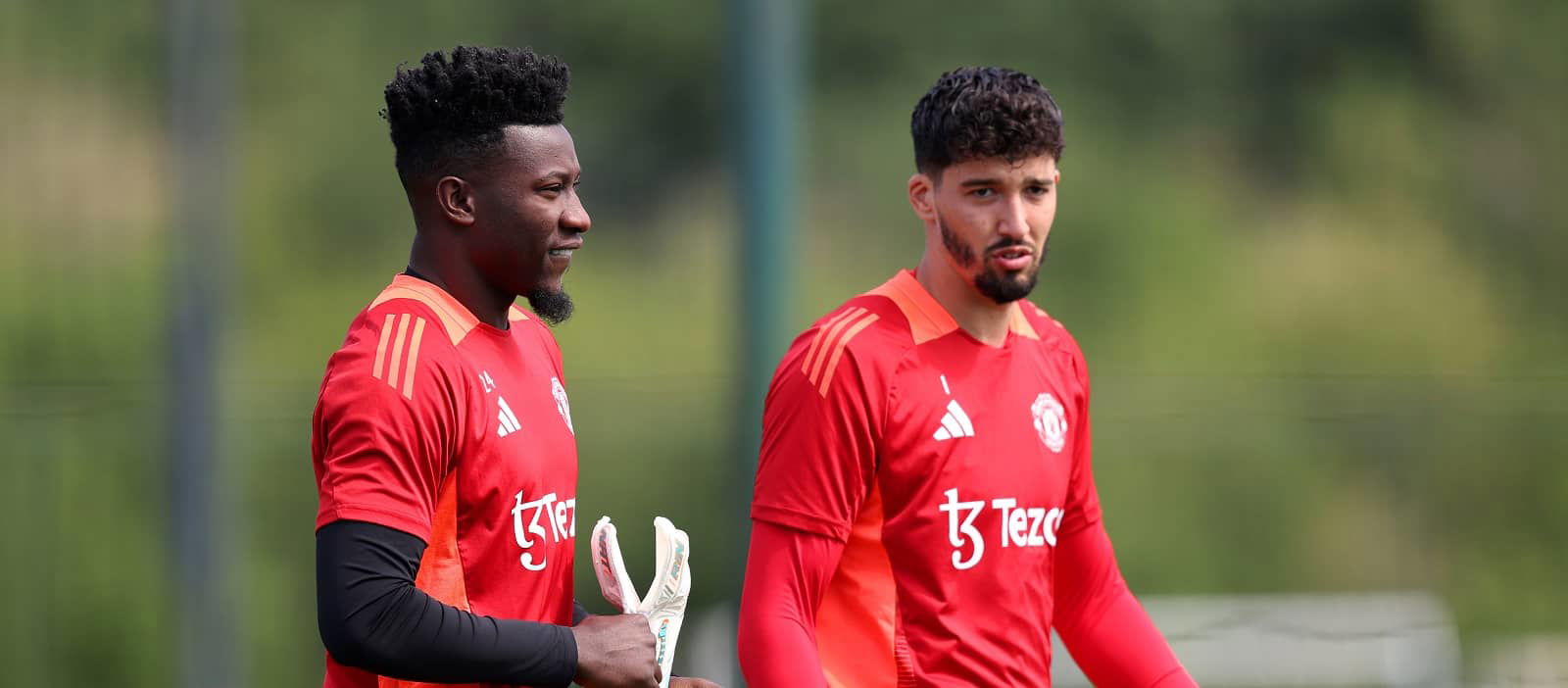
    Manchester United head coach Ruben Amorim has quite the conundrum to solve when it comes to his goalkeepers.

    Andre Onana committed several high-profile errors last season, and that trend has continued this season, with the Cameroonian responsible for the club’s humiliating EFL Cup exit at the hands of League Two side Grimsby Town.

    His backup, Altay Bayindir, has also not set the stage alight. The Portuguese tactician turned to the Turk in the Premier League, but he has made mistakes in all three games so far.

    Which is why the ex-Sporting CP boss pushed for a new goalkeeper with INEOS landing Senne Lammens from Royal Antwerp.

    Both goalies have not covered themselves in glory

    Emiliano Martinez was left heartbroken as his move collapsed on deadline day due to Jadon Sancho’s unwillingness to move to Aston Villa permanently.

    Now with the Belgian onboard, the 20-time English league champions have four senior goalkeepers, and something has to give.

    Tom Heaton, who signed a new deal in the summer, is unlikely to leave, having been made a member of the leadership group within the squad, with many players feeling he is good enough to replace either Onana or Bayindir.

    There have been reports stating INEOS are looking to offload both goalies, with the Cameroon international attracting interest from both Turkiye and Saudi Arabia, with the ex-Fenerbahce ace could head back to his homeland.

    But Teamtalk have now revealed that United would prefer to offload Andre Onana instead, and it makes a lot of sense. He is the higher earner, and is on the hunt for a new contract, something he is unlikely to receive at Old Trafford.

    Onana to be cut loose

    “United are listening to offers for BOTH Andre Onana and Altay Bayindir.

    “However, they are only expected to green-light the exit of one of them, given new signing Senne Lammens, from Royal Antwerp, will take over from the other, either as the starter or the second choice.

    “TEAMtalk is aware that Onana is indeed going to be cut loose if United can find a club to take him. Sources have stated they are more than willing to part ways with the former Inter Milan goalkeeper.”

    He will also depart for the Africa Cup of Nations, and Amorim would prefer to not lose too many stars at that crucial juncture of the season.

    Feature image Matt McNulty via Getty Images


    Follow us on Bluesky: @peoplesperson.bsky.social

    [ad_2]

    Source link

  • players Who Forced A Transfer In Recent Times

    players Who Forced A Transfer In Recent Times

    [ad_1]

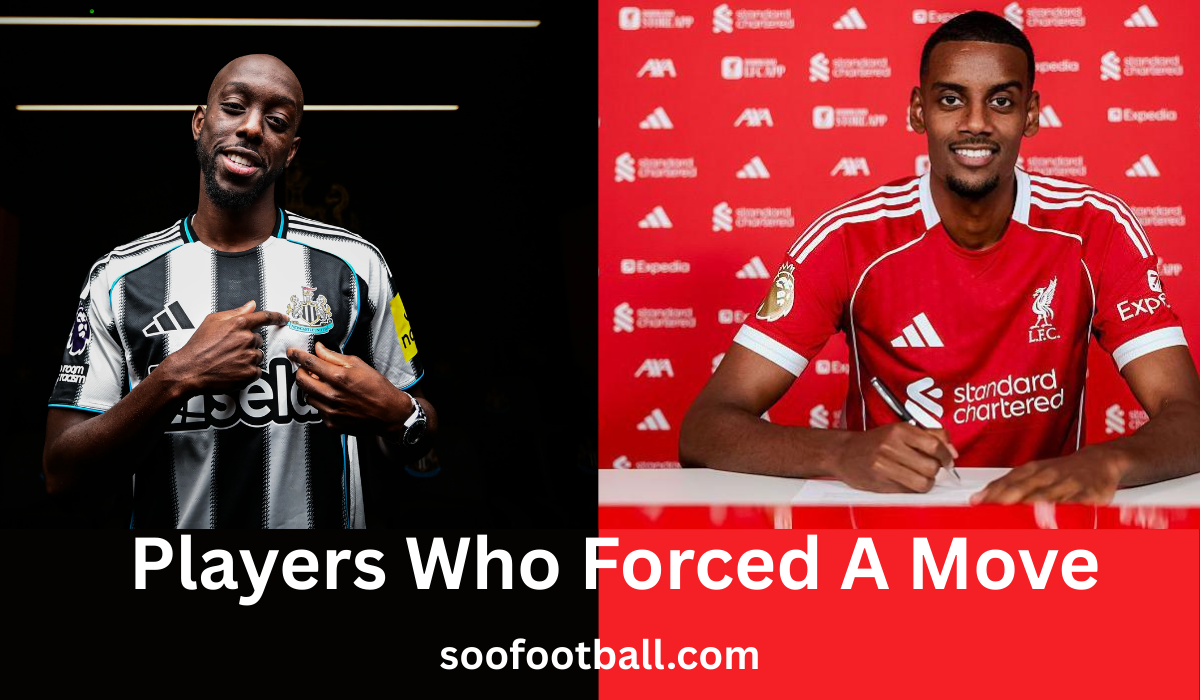
    In light of the recent British-record transfer of Alexander Isak to Liverpool after his strike, there is a need to explore more of such cases of players who forced a transfer or move to a big club in recent times.

    1. Alexander Isak (Newcastle to Liverpool)

    Isak at first did not make his desire clear as to what he wanted in the Transfer. However, after Liverpool secured a move for Hugo Etikite, Isak then made clear to Newcastle his desire to move to Liverpool. This encouraged Liverpool to make a bid to Newcastle. However, Newcastle reportedly rejected several bids for Isak from Liverpool, and this frustrated the Swedish striker.

    What would he do next? The Swedish striker refused to turn up for the Pre-season and eventually went on Instagram to make a statement about Newcastle’s ‘broken promises’. Long story short, on deadline day, Newcastle finally accepted Liverpool’s £125M record bid for Isak, and the player secured his dream move.

    2. Yoane Wissa (Brentford to Newcastle)

    The case is very similar for Yoane Wissa. After scoring 20 Premier League goals for Brentford last season, Wissa was hungry for a move to a bigger club. Just like Newcastle, Brentford rebuffed many offers for Wissa, much to the frustration of the striker.

    Wissa, just like Isak, went on Instagram to make a statement of broken promises, and he refused to show up for Preseason.

    Eventually, Brentford sold Wissa to Newcastle for £55m. The player finally got his wish.

    3. Viktor Gyökeres (Sporting CP to Arsenal)

    Gyökeres scored at a ridiculous rate at Sporting. He scored 97 goals and had 26 assists in 102 games. In his over two seasons at the club, he helped the club win two league titles.

    As a result of his success, Gyökeres reportedly had a gentleman’s agreement to allow him to move to a bigger club for less than his supposed release clause of €100m.

    Arsenal then came knocking, but Sporting insisted on the ‘official’ €100m release clause. This frustrated Viktor Gyökeres, and he went on strike, saying he would never play for Sporting again.

    Eventually, Sporting accepted Arsenal’s €63m bid, and the player secured his dream move.

    4. Moisés Caicedo (Brighton to Chelsea)

    The Moisés Caicedo saga also dragged on for weeks. Brighton initially stood firm and claimed that the Ecuadorian was not for sale. But Caicedo had other ideas. After a brilliant season in Brighton’s midfield, Chelsea were desperate to get him, and the player himself was equally desperate to leave.

    Caicedo even went public with social media posts, pleading with Brighton to allow him to move on. This did not sit well with the club, and as a response, Brighton sent him away from the training ground for a few weeks. The standoff only fueled Chelsea’s determination, and eventually, the London club came back with a record-breaking offer of £115 million in August 2023. Brighton had no choice but to accept, and Caicedo finally got his big move.

    5. Matheus Nunes (Wolves to Manchester City)

    When Manchester City came calling, Matheus Nunes knew he couldn’t resist. Wolves, however, were reluctant to lose their star player. But how would Nunes react? Well, he reacted in the worst possible way by refusing to turn up for training. The player’s camp made it clear he would not play for Wolves again until the deal was sorted.

    It was an ugly standoff. Wolves fans felt betrayed, and the club publicly criticised his behaviour. But Nunes would not budge. In the end, City got their man for £53m.

    6. Dimitri Payet (West Ham to Marseille, 2017)

    West Ham fans adored Payet for his magic on the ball. The man was ridiculously talented. However, in January 2017, Payet’s heart was elsewhere. He informed the manager and the board that he wanted to return to Marseille, no matter what. Payet then shocked the club by refusing to play.

    Because he was their starman, West Ham tried to hold firm. But Payet’s continued refusal to train or play created a toxic atmosphere around the team. Eventually, West Ham caved and sold him back to Marseille for £25m. For the Hammers, it was the end of a love affair. For Payet, it was proof of how powerful a player’s will can be, as seen in so many cases discussed above already.

    7. Harry Kane (Tottenham to Bayern Munich)

    In all honesty, Harry Kane’s situation was slightly different but still important to discuss. Kane had long hinted at wanting trophies, and when big clubs circled, he tried to push Spurs into selling. He delayed his return to preseason training, which was seen as a clear or subtle protest against Daniel Levy and the club’s refusal to negotiate with Bayern Munich.

    The saga became headline news, and Spurs fans became divided. Some were sympathetic and others were furious.

    In the end, in 2023, Kane became the most expensive signing in Bundesliga history, costing a whopping €110 million.

    8. Carlos Tevez (Manchester City, 2011)

    Tevez’s fallout with Manchester City was one of the most dramatic of its era. During a Champions League game, Tevez refused to warm up when called upon as a substitute by Roberto Mancini. From that moment, the relationship between Tevez and City broke down.

    He effectively went AWOL for months. Tevez went back to Argentina instead of returning to training at City. Man City eventually had to accept that the striker would never play for them again under the same terms. Though he returned briefly, the writing was on the wall, and Tevez eventually left for Juventus.

    Tevez’s strike remains one of the most infamous in Premier League history.

    9. William Gallas (Chelsea to Arsenal, 2006)

    This one still feels the most incredible of all cases. Gallas reportedly threatened to score an own goal if Chelsea forced him to play when he wanted to leave. He refused to train and made life so difficult that Chelsea were backed into a corner.

    In the end, he got his wish. Gallas moved to Arsenal in a transfer that shocked the Premier League. The Gallas’ story is one of the most controversial characters of that era.

    10. Luka Modrić (Tottenham to Real Madrid)

    By 2012, Luka Modrić had outgrown Tottenham. Real Madrid wanted him, but Spurs chairman Daniel Levy was notoriously tough in negotiations. Modrić decided to take matters into his own hands. He refused to join the Spurs on their preseason tour and even skipped training sessions, making his stance crystal clear.

    Eventually, Spurs accepted Real Madrid’s offer of around £31m, and the player was able to secure his dream move.

    11. Ousmane Dembélé (Borussia Dortmund to Barcelona)

    Dembélé’s strike at Dortmund was one of the most dramatic and yet another example of players who forced a transfer in recent years. After Barcelona lost Neymar to PSG, they made Dembélé their top target. Dortmund, however, didn’t want to sell their star talent.

    How would Dembélé respond? He skipped training altogether and went completely AWOL. Dortmund had no choice but to suspend him, and it became clear the relationship was broken beyond repair. Barcelona returned with a monster bid of €105 million. And Dortmund finally gave in.

    12. Dani Alves (Sevilla to Barcelona)

    Dani Alves was already one of the best full-backs in Europe when Barcelona came calling. Sevilla initially refused to let him go, especially since he was crucial to their squad. But Alves would not take no for an answer.

    He refused to play in Champions League qualifiers, and he effectively removed himself from selection for a long period. Sevilla eventually agreed to sell him for £23.5m. For Barcelona, it turned out to be one of the best signings in their history, but for Sevilla, the way Alves forced the move left a sour note.

    13. Riyad Mahrez (Leicester to Manchester City)

    Riyad Mahrez had given Leicester everything, including playing a key role in their miraculous Premier League title win in 2012. But when Manchester City came knocking, he decided it was time to move on. Leicester rejected City’s initial bids, which led to Mahrez’s frustration.

    Mahrez missed training sessions and even matches. In fact, it was a prolonged standoff, with Leicester refusing to negotiate with City at all. But eventually, Mahrez got his way. City paid a whopping £60m fee, and Mahrez finally got his wish.

    Conclusion

    These examples of players who forced a transfer move are case studies that are clear indications that players sometimes need to force their employers in order to secure their dream move. But is it right to get it done this way? Should clubs stand in the way of players who wish to leave? Is it, rather, fair for clubs to also cast players off to the reserve when they are not needed anymore? Share your thoughts in the comment section!
    [ad_2]

    Source link

  • Cristiano Ronaldo didn’t hesitate when naming who should win the Ballon d’Or out of Yamal & Dembele

    Cristiano Ronaldo didn’t hesitate when naming who should win the Ballon d’Or out of Yamal & Dembele

    [ad_1]

    The two stars are leading contenders for the award after delivering exceptional performances for both club and country. ..Continue Reading

    [ad_2]

    Source link

  • Salah vs Ronaldo Premier League Stats: Who Has A Better Record?

    Salah vs Ronaldo Premier League Stats: Who Has A Better Record?

    [ad_1]

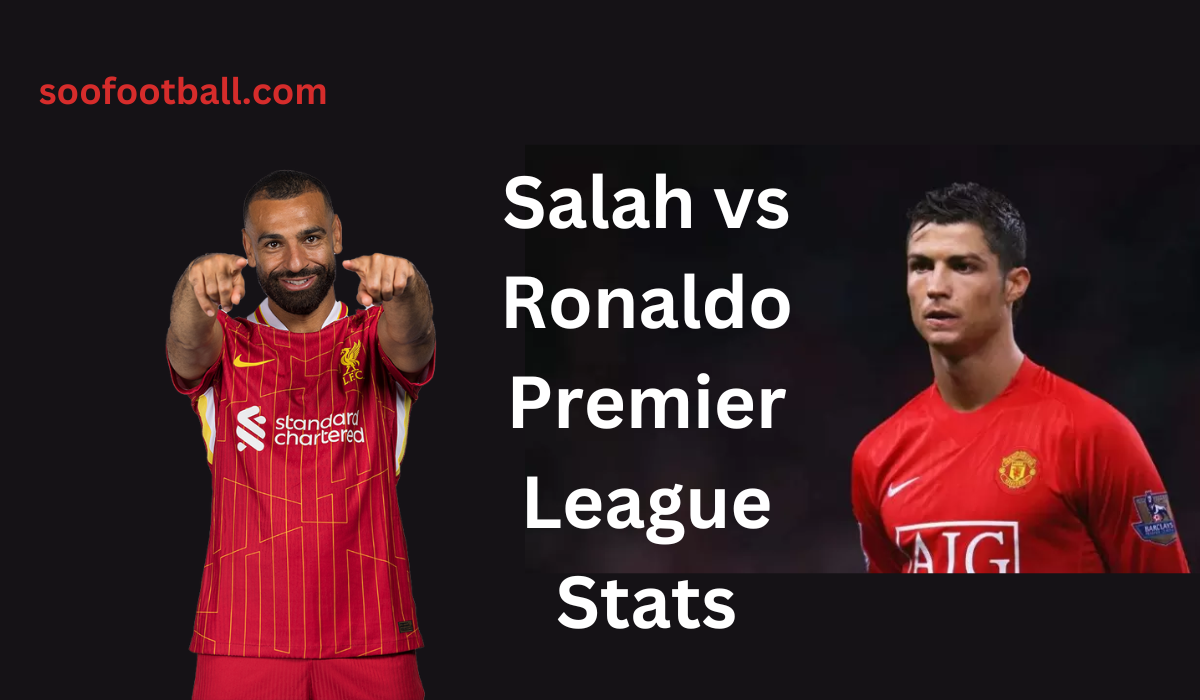
    The debate between Mohamed Salah vs Cristiano Ronaldo Premier League Stats has often been fueled by passion, nostalgia, and loyalty. This article, however, sets aside the overall career legacies of these two stars and focuses solely on their Premier League contributions. Using verified statistics from their stints in England—Ronaldo’s time at Manchester United and Salah’s tenure at Liverpool—we present a logical and numbers-based comparison that lets the data speak for itself.

    The Metrics & Limits

    To keep the analysis fair and focused, we are comparing only the Premier League records of both players. By excluding data from LaLiga, Serie A, or other competitions, we remove the influence of different playing styles, opposition levels, and tactical systems across leagues. This approach allows us to concentrate on what each player has achieved in one of the world’s most competitive and physically demanding leagues.

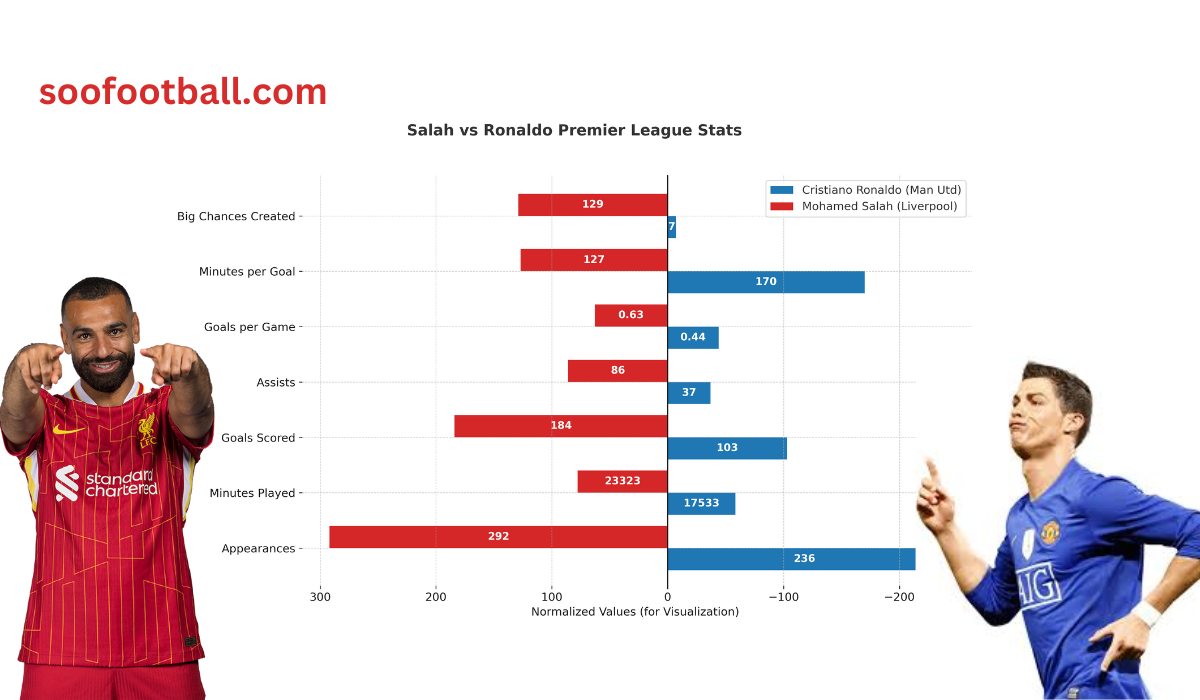
    Our analysis revolves around several key metrics: the number of appearances, goals scored, assists provided, total minutes played, goals per game, minutes per goal, and overall goal involvement per 90 minutes. One metric that often sparks debate is “big chances created” — an indicator of a player’s creative contribution by generating high-quality goal-scoring opportunities. For context, official data shows that while Cristiano Ronaldo created 7 big chances during his Manchester United era, Mohamed Salah has created a staggering 129 big chances for Liverpool in the Premier League.

    Salah vs Ronaldo Premier League Stats Analysis

    When we look at the raw numbers, the differences become immediately apparent. Cristiano Ronaldo made 236 Premier League appearances for Manchester United, accumulating 17,533 minutes on the pitch. During that period, he scored 103 goals and registered 37 assists, averaging roughly 0.44 goals per game. In comparison, Mohamed Salah’s record at Liverpool includes 292 appearances and 23,323 minutes played. Salah’s numbers shine further with 184 goals and 86 assists, equating to an average of 0.63 goals per game. This means that Salah finds the net more frequently and also contributes more to his team’s overall attacking output.

    A useful way to visualize these differences is by considering the number of minutes each player requires to score a goal. Ronaldo averaged about one goal every 170 minutes, while Salah’s efficiency stands at approximately one goal every 127 minutes. When combined with their assist records, Salah’s overall goal involvement per 90 minutes is significantly higher than Ronaldo’s in the Premier League. This stark contrast forms the backbone of our analysis.

    To summarize these comparisons, consider the following table:

    Metric Cristiano Ronaldo (Man Utd) Mohamed Salah (Liverpool)
    Appearances 236 292
    Minutes Played 17,533 23,323
    Goals Scored 103 184
    Assists 37 86
    Goals per Game 0.44 0.63
    Minutes per Goal ~170 ~127
    Big Chances Created 7 129

    These numbers do more than simply display raw statistics; they tell a story of differing roles and contributions in the Premier League. While Ronaldo was known for his direct, clinical finishing at Manchester United, Salah’s game at Liverpool has been defined not only by his prolific scoring but also by his creative prowess. Salah’s high number of big chances created illustrates his integral role in building attacks and creating opportunities for his teammates—a dimension that Ronaldo’s Premier League numbers do not capture nearly as well.

    Salah vs Ronaldo Premier League Stats infographic

    Critical Evaluation – Questions Asked

    This analysis naturally raises several thought-provoking questions. If some argue that Ronaldo’s overall career achievements are unparalleled, how do they address the fact that, when compared solely on Premier League records, Salah’s numbers suggest a higher scoring frequency and more creative output? Is it fair to compare a player’s global legacy with league-specific performance, or should we recognize that the Premier League represents a unique environment that highlights different strengths?

    Another important consideration is the context in which these numbers were generated. The roles played by each star were shaped by the tactical systems at their respective clubs. Manchester United’s style during Ronaldo’s tenure might have limited his opportunity to create big chances, whereas Liverpool’s attacking philosophy has allowed Salah to flourish both as a scorer and a creator. Thus, one might ask: to what extent does a player’s environment influence these metrics? And if a player’s role is tailored to maximize their strengths, does that not deserve recognition in a fair comparison?

    Lastly, these statistics prompt us to ponder the relationship between volume and impact. While Ronaldo’s lower big chance creation figure might seem underwhelming compared to Salah’s, his overall record—including pivotal goals in high-pressure situations—remains impressive. Yet, when evaluating pure Premier League performance, Salah’s numbers provide a compelling case for his remarkable influence on the game.

    Logic Over Emotion

    One of the common arguments from Ronaldo fans is that his overall career accomplishments and his ability to change the outcome of a match in critical moments should overshadow the raw numbers. However, by narrowing our lens to Premier League stats, the debate shifts. In this context, the data suggests that Salah has not only been more efficient in scoring but also more consistent in his creative contributions.

    For instance, consider the discrepancy in big chances created: while Ronaldo’s 7 big chances may be viewed as a byproduct of his finishing-focused role, Salah’s 129 big chances underscore his dual-threat capability. The numbers force us to ask, how can one reconcile a player who excels in finishing with another who consistently builds attacking opportunities? And if we consider minutes per goal and overall involvement, Salah’s higher figures challenge any claim that Ronaldo’s record at Manchester United was the gold standard in the Premier League.

    Moreover, the context of their appearances must be considered. Salah’s role at Liverpool involves more touches and creative freedom in a system designed to maximize his output, while Ronaldo’s contribution, although significant, was more limited in a different tactical setup. Does this mean one player is inherently better, or that their contributions are uniquely suited to their teams? The numbers suggest that, at least in the Premier League, Salah’s overall impact on his team’s attacking play has been more substantial.

    Conclusion

    Ultimately, this comparison of Salah vs Ronaldo Premier League Stats invites readers to reflect on what truly defines excellence in one of the world’s toughest leagues. The figures reveal that Mohamed Salah, with his higher goals per game, superior scoring efficiency, and outstanding creative contributions—particularly the big chances created—has left an indelible mark on the Premier League. Meanwhile, Cristiano Ronaldo’s achievements at Manchester United remain impressive in their own right but, when viewed through the narrow lens of league-specific statistics, present a very different narrative.

    By asking the right questions—about context, role, and the nature of impact—this analysis encourages a balanced discussion that goes beyond overall career accolades. In the end, the numbers provide a logical framework for comparison that challenges us to appreciate the unique contributions of both players while recognizing that, in the Premier League, Mohamed Salah’s record stands out as exceptionally prolific and creatively influential.

    The debate may never be conclusively resolved, but by focusing solely on Premier League data, we offer a fresh perspective on two of football’s modern icons. Whether you lean toward Ronaldo’s legendary status or appreciate Salah’s record-breaking output, the truth remains that both have shaped the league in remarkable ways—each in their own distinct manner.

    [ad_2]

    Source link